Big trees are the backbone of any great garden—they provide structure, shade, and that “established” feel. But let’s be honest, nobody wants to wait thirty years for a sapling to finally look like a tree. If you’re looking for results fast, you’ve come to the right place. I’ve rounded up seven of the most popular fast-growing trees, plus a personal favorite “insider tip” to help you transform your yard in record time.
[[pflanzen]]
++Dawn Redwood (Metasequoia glyptostroboides)
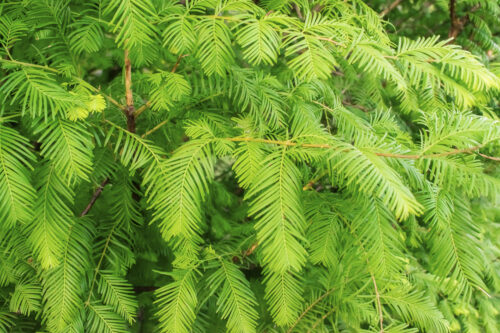
Don’t let the name fool you—this isn’t a Giant Sequoia, but a unique relative of the Bald Cypress. This “living fossil” is a speed demon, shooting up by as much as three feet every year! While it eventually slows down as it reaches its mature height of 60 to 130 feet, it maintains a striking, symmetrical, cone-shaped crown. One of the coolest things about the Dawn Redwood? It’s a deciduous conifer. Its soft, bright green needles turn a stunning fiery orange-yellow in the fall before dropping for the winter.
++Scots Pine (Pinus sylvestris)
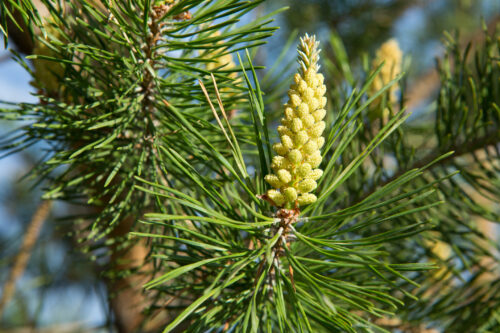
If you’re looking for a hardy evergreen that doesn’t take forever to grow, the Scots Pine is a fantastic choice. It reaches its final height of 30 to 100 feet relatively quickly. If you leave it unpruned and give it plenty of elbow room, it develops a gorgeous, twisted trunk and a picturesque, umbrella-like canopy. The blue-green needles of the Scots Pine grow in pairs, and you’ll often see grey-brown cones decorating the branches, adding a classic woodland vibe to your landscape.
++Norway Maple (Acer platanoides)
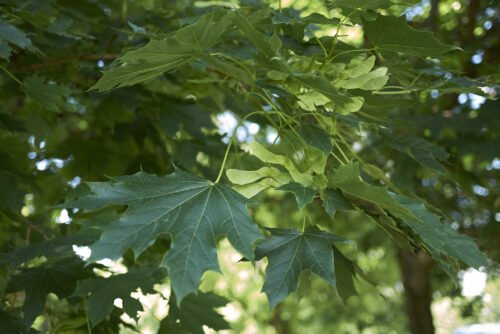
You can easily spot this fast-grower by its classic five-to-seven-lobed leaves. In the fall, they put on a show, turning bright yellow with hints of red. The Norway Maple is particularly ambitious in its youth, often growing up to two feet per year. It forms a dense, rounded crown that provides excellent shade in just a few seasons. Keep an eye out in April for its yellow flowers, which eventually turn into those iconic “helicopter” winged seeds we all loved as kids.
++Willow (Salix)
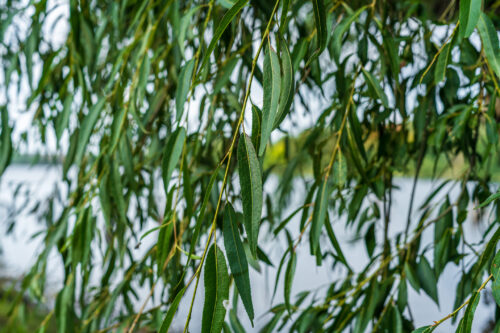
Willows are legendary for their growth rate, with many varieties reaching impressive heights in just a few years. They aren’t just fast; they’re also a huge win for local wildlife. Starting in March, they produce silvery-grey catkins covered in yellow pollen—a vital early-season snack for bees. Willows are pretty low-maintenance and aren’t picky about soil, as long as they get plenty of sunlight.
++Empress Tree (Paulownia tomentosa)
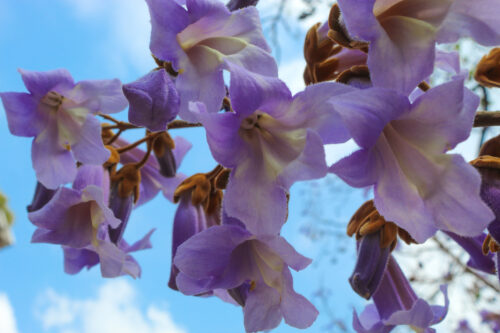
While you might have to wait about eight years for the first flowers, the payoff is incredible: massive, fragrant, violet-blue flower clusters that stop traffic. The Empress Tree loves a slightly milder climate and is a true champion of growth—young trees can grow over three feet in a single year! It features huge, heart-shaped, fuzzy leaves that can reach up to 15 inches across. The foliage appears late in the spring and stays green right up until the first frost.
++Staghorn Sumac (Rhus typhina)
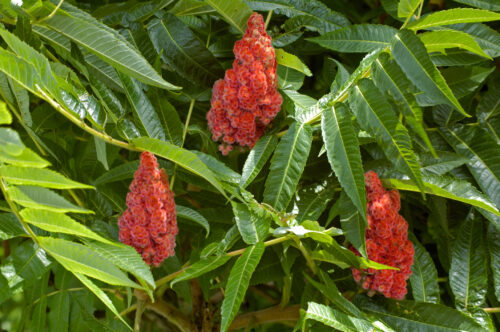
Staghorn Sumac is a sprinter, especially in its early years. It likes to spread out, so if you have a smaller yard, you might want to use a root barrier to keep it in check. The large, feathery leaves turn a brilliant orange-red in the autumn, creating a real focal point. In early summer, the sumac produces cone-shaped flower clusters that turn into fuzzy red fruit. These “bobs” stay on the tree through winter, providing visual interest and food for birds when everything else is bare.
++Southern Catalpa (Catalpa bignonioides)
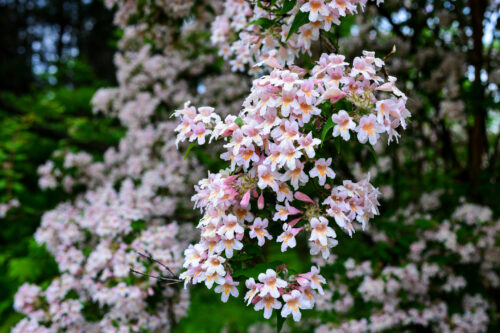
Catalpas are fantastic “shade trees” because they develop a wide, leafy canopy very quickly. The massive leaves even release a pleasant scent when rubbed. In late spring, the tree is covered in spectacular, bell-shaped white flowers with purple and yellow markings inside—they look like tiny trumpets! While the leaves show up a bit late in the spring and drop early in the fall, the shade they provide during the heat of summer is unbeatable.
%%Our Insider Tip: Kanzan Cherry (Prunus serrulata ‘Kanzan’)
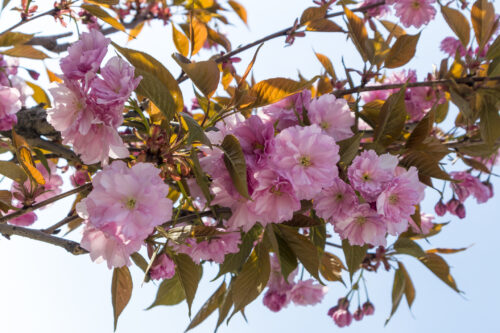
This is one of the most beloved ornamental cherries for a reason. It grows about a foot per year, which is quite fast for a flowering tree. The real draw here is the double-pink blooms that appear in late April, turning the entire tree into a pink cloud. Once the flowers fade, the new leaves emerge with a cool bronze tint before turning a glossy deep green. In the fall, the foliage shifts to a lovely yellow-orange, giving you multiple seasons of color in one fast-growing package.