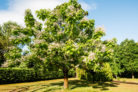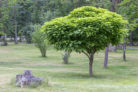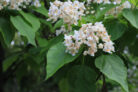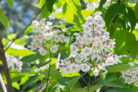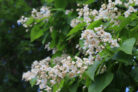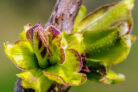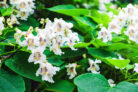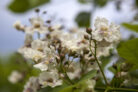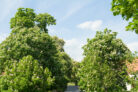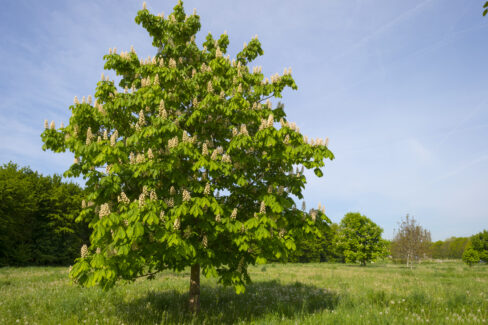
The Catalpa tree (often called the Southern Catalpa or Indian Bean Tree) is a real showstopper that can reach impressive heights of up to 60 feet, spreading its canopy wide as it matures. But don’t expect it to happen overnight! These beauties are known for taking their sweet time to reach their full potential.
How Big Does a Catalpa Tree Actually Get?
If you pick the perfect spot and give it some TLC, a Catalpa can soar to a maximum height of about 60 feet. It’s not just a vertical grower, either—this tree loves to stretch out, reaching widths of up to 35 feet. That’s a lot of shade!
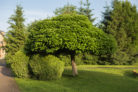
Keep in mind that not every variety is a giant. If you have a smaller yard, varieties like ‘Nana’ (the Dwarf Catalpa) stay much more compact. These smaller versions are perfect for large pots or for pruning into those tidy, globe-shaped canopies you see in formal gardens.
Patience is Key: The Catalpa’s Growth Rate
Even though these trees can get massive, it takes quite a few years to get there. If you’re dreaming of a fully grown Catalpa, you’re going to need some patience because they are relatively slow growers. On average, you can expect:
- About 12 to 20 inches of growth per year for standard trees.
- Only about 2 to 4 inches per year for dwarf or globe varieties.
Can You Speed Things Up with Fertilizer?
While the right environment is the biggest factor in how your tree develops, a regular fertilizing routine can give it a little nudge. Just be careful—you don’t want to overdo it, and picking the right “food” is crucial.
Here’s the trade-off: Nitrogen-rich fertilizers are great for boosting height and green growth, but they can be a bit of a buzzkill for flowers and the signature bean-like fruits. Before you fertilize, decide what’s more important to you: a taller tree or a spectacular floral display.
Give It Some Elbow Room
Because of how big these trees can get, you really need to think ahead when planting. Make sure to give it plenty of space away from other plants and trees. The Catalpa casts a very dense shadow that can starve sun-loving neighbors of light, and its wide-reaching root system can be a bit of a bully underground!