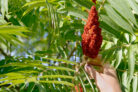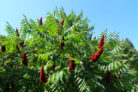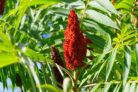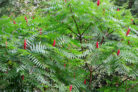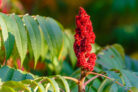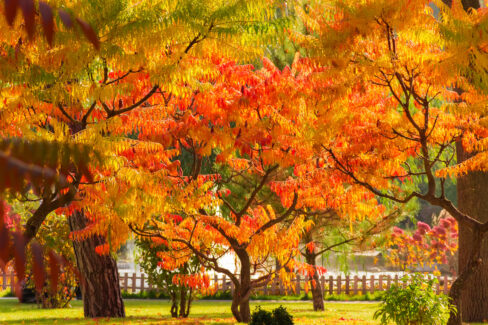
The Staghorn Sumac (botanical name: *Rhus typhina*) is a stunning ornamental shrub famous for its spectacular fall colors. If you plant it in a sunny spot, those leaves will turn incredibly vibrant! The best part? It’s not picky at all about soil. While it’s a low-maintenance beauty in the ground, it does need a little extra TLC if you decide to grow it in a container.
The Basics
- Multi-stemmed shrub
- Growing styles: Garden landscape, containers, or even Bonsai
- Height: Up to 23 feet in the ground; 6 to 10 feet in pots
- Growth habit: Upright and wide-spreading
- Flowers: Greenish, inconspicuous panicles up to 8 inches long
- Bloom time: June to July
- Fruit: Small, fuzzy, red drupes (berries)
- Leaves: Pinnate (feathery), up to 24 inches long, deciduous
- Fall Color: Shifts from yellow to orange to a brilliant crimson red by October
- Uses: Ornamental focal point, great for attracting birds
Location
- Full sun is best, but it can handle partial shade
- Very tolerant of urban environments and pollution
Soil & Substrate
- Not picky about soil types
- Does not like “wet feet” (standing water)
- Ideal conditions: Normal, well-draining soil that isn’t too alkaline
Planting
In the Garden
- Dig a planting hole about 6.5 feet wide and 2 feet deep (it’s a shallow-rooted plant)
- You absolutely must install a root barrier when planting
- This plant is a spreader! Runners can reach over 30 feet, leading to uncontrolled growth
- Space it at least 10 feet away from other plants
- Keep it away from garden ponds; those aggressive roots can actually puncture pond liners!
In Containers
When growing sumac in pots, even young plants need a container with at least a 2.5-gallon capacity.
To prevent root rot, make sure the pot has drainage holes. I also recommend adding a layer of gravel or clay pebbles at the bottom for extra drainage.
Plan on repotting your sumac about every two years.
Care & Maintenance
Watering
Whether it’s in a pot or the ground, try to use soft water (like rainwater) if possible.
- In the ground: Only needs water during long dry spells.
- In pots: Water regularly, but let the top of the soil dry out between soakings. Give it a little sip now and then during the winter, too.
Fertilizing
If your garden soil is poor, spread some compost or aged manure around the base before the leaves bud out in spring.
For container plants, use a regular liquid fertilizer during the growing season.
Pruning
Good news for low-maintenance fans: the Staghorn Sumac doesn’t require regular pruning.
Winter Care
In the ground, this shrub is a champ. It’s hardy down to -4°F and doesn’t need any extra protection.
In containers, however, you’ll want to protect the roots from freezing. The best winter home is somewhere bright and cool but frost-free, such as:
- A carport
- A shed
- An unheated garden house
Avoid bringing it into your living room or a heated sunroom—it’s much too warm for the plant to go through its natural winter dormancy.