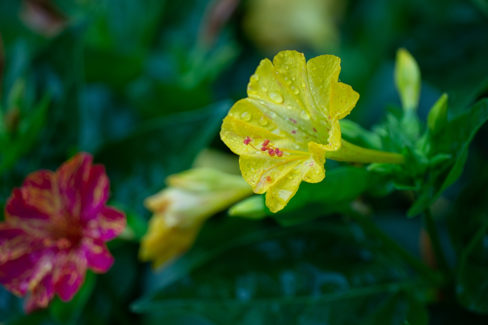
The Four O’Clock flower (scientifically known as *Mirabilis jalapa*) originally made its way to us from the tropical regions of South America. Because it hails from such a balmy climate, this plant is a total sun-worshipper and loves warmth year-round. Since our winters are a bit more “frosty” than “tropical,” this beauty isn’t hardy and needs a little extra TLC to make it through the cold months.
The Perfect Spot and Those Magical Blooms
If you want your Four O’Clocks to thrive, pick a spot in your garden that’s drenched in full sun, warm, and shielded from harsh winds. Once the late spring warmth hits, they really take off, leading up to a spectacular show starting in June.
Here’s the cool part: their fragrant, multicolored flowers don’t actually open until the late afternoon (hence the name!). They stay open all night long, acting like a neon sign for hawkmoths and other nocturnal pollinators. By morning, the blooms fade away to make room for a fresh batch of buds. This cycle keeps going all the way through October.
Getting Ready for Winter
When the days get shorter and those nighttime temps start dipping into the low 40s, your Four O’Clocks will wrap up their flowering season and head into dormancy. You’ll notice the stems dying back and the leaves turning yellow. Don’t worry—this is just the plant moving all its energy down into its underground tuber to save up for next year.
Because of these tubers, you can keep your Four O’Clocks going for years! However, they won’t survive a freeze in the ground, so you’ll need to dig them up. Here’s your game plan:
- Stop fertilizing in September.
- Gradually cut back on watering.
- Carefully lift the tubers out of the ground with a garden fork.
- Trim off any dead stems and excess roots.
- Gently knock off the extra soil.
- Store the tubers individually.
If you’re overwintering several tubers, make sure they aren’t touching each other to prevent rot. A wooden crate or a box filled with dry sand works perfectly. You don’t want them to dry out completely, so keep them somewhere with a bit of humidity. If your storage area is really dry, give them a light misting with a spray bottle every two weeks.
Planting Time
Once the threat of frost has passed in mid-May, the soil should be warm enough for the tubers to go back outside. Plant them about an inch deep (3 cm) in loose, well-draining soil. I always like to mix in a little fresh compost at planting time to give them a healthy head start for the season!