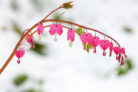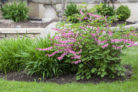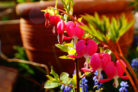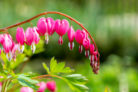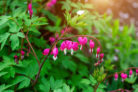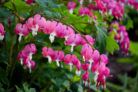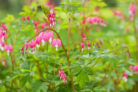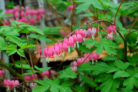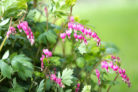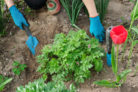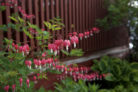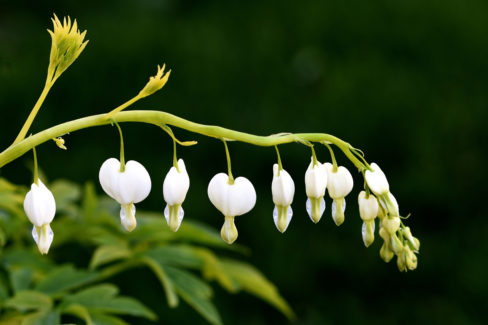
Bleeding Hearts are such a welcome sight in the spring garden! These beauties are some of the first to wake up, sending out those delicate, reddish stems and leaves from their winter nap. While they are pretty tough in the ground, they do need a little extra TLC if you’re growing them in pots.
- Wintering in the Garden
Once the blooming season is over, you’ll notice your Bleeding Heart’s leaves starting to turn yellow. Don’t panic—that’s just the plant’s way of getting ready for winter. It’s slowly pulling all its energy and nutrients down into the underground rhizome, where it stays tucked away and protected by the soil. Because of this, Bleeding Hearts can usually handle a harsh winter just fine. However, if you’re expecting a “black frost” (freezing temps without any snow cover to act as insulation), it’s a smart move to cover the root area with some brushwood or evergreen boughs. Keep that protection in place until the threat of night frosts has passed in the spring.
- Wintering in Containers
If you’re growing your Bleeding Heart in a pot, you’ll need to be a bit more proactive since the roots are more exposed to the cold. Start by moving the container close to the house—the warmth from the walls and the protection from the wind make a big difference. Here’s how to winter-proof your pot:
- Place the pot on an insulating base, like a piece of Styrofoam or a thick wooden board, to keep it off the cold ground.
- Wrap the pot itself in burlap, frost fleece, or even bubble wrap.
- Cover the top of the soil with brushwood or dry leaves.
- Give it a tiny bit of water on frost-free days. You don’t want the roots to dry out completely, but don’t overdo it!
- Skip the fertilizer entirely during the winter dormancy.
Spring Care
In early spring, your Bleeding Heart will start pushing out new growth. Even though the plant is hardy, those brand-new, tender shoots are very sensitive to frost. Late-season night frosts can really zap the new growth, so it’s a good idea to keep them covered with some leaves or evergreen branches. You can even pop a frost cover or an upside-down flower pot over them at night if a freeze is in the forecast.
Wintering Indoors (Cold House Method)
If you have the space, potted Bleeding Hearts can also spend the winter in a “cold house” environment. This means a bright spot that stays cool but frost-free. An unheated greenhouse, a bright garage, a cool sunroom, a stairwell, or even a chilly spare bedroom works great. The sweet spot for temperature is between 50°F and 54°F (10-12°C). Just remember to water sparingly and hold off on the fertilizer until spring!