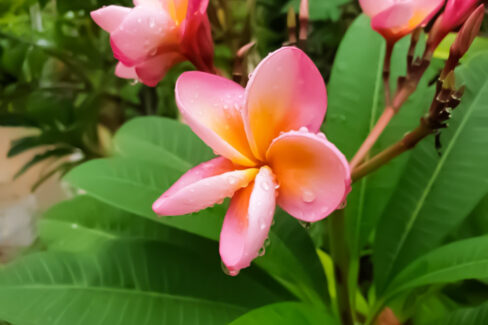
Propagating Frangipani (also known as Plumeria) from cuttings is a super easy way to grow new baby plants while ensuring they keep the exact same flower color as the “mother” plant. The secret to success? Make sure your mother plant is healthy and strong before you start.
Taking Your Cuttings
To give your cuttings the best start in life, there are a few things you’ll want to keep in mind right from the first snip.
Timing
The best time to take cuttings is when the mother plant is:
- In full bloom and
- In its active growth phase.
This is when the cutting has the most energy stored up to start growing its own roots. Alternatively, you can take cuttings right before the plant goes into its winter dormancy.
The Cut
When you’re ready to cut, aim for a clean, straight slice. You want to avoid cutting into the soft green part of the stem. When picking out the perfect cutting, look for:
- A tip that is ideally just starting to branch out.
- A diameter of at least one inch (about 2 cm).
- A minimum length of 10 inches (25 cm).
Make your cut below the green growth, right in the “gray” woody area. Just a heads-up: the milky sap that leaks out is toxic, so keep a clean tissue handy to catch any drips.
Rooting Your Cuttings
Before you put your cutting in the ground, it needs to dry out completely. For a fresh cutting, it usually takes about five days for the cut end to callous over (it will look woody). Once it’s dry, you can pop it into a pot. For the growing medium, you can use:
- A custom soil mix or
- Straight horticultural perlite.
The Soil Mix
If you prefer rooting in soil, a mix of:
- Perlite,
- Coconut coir, and
- Cactus potting soil
is ideal. You can also find specialty Plumeria soil if you want to keep it simple. After planting, give the soil just a tiny bit of water. Only water again (and just a little!) when the soil:
- Looks visibly dry and
- Feels dry to the touch.
Horticultural Perlite
If you decide to go with pure perlite, you’ll need to water your cutting every two to three days.
Location
To get those roots moving, place your cuttings in a warm, sunny spot. Bottom heat (warm soil) is especially important! If the weather is nice and warm outside, feel free to let them soak up the sun outdoors.
Repotting Your Cuttings
Once your cuttings have established roots, it’s time to repot them into their own permanent homes. This is necessary if:
- They were rooted in pure perlite or
- You had multiple cuttings sharing one pot.
How do you know if your Plumeria has successfully rooted? Look for these signs:
- It stays firm and doesn’t budge when you give it a gentle wiggle.
- You see new growth starting to sprout at the top.
Once they’re repotted and rooted, you can treat your new babies just like fully-grown plants!