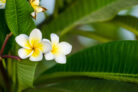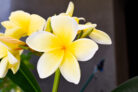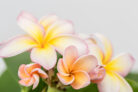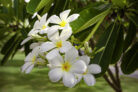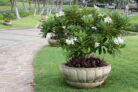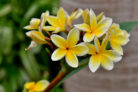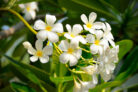
Since Frangipani (Plumeria) is incredibly sensitive to the cold, bringing it indoors for the winter isn’t just a suggestion—it’s a must. For us gardeners, this part of the year requires a lot of self-discipline because the golden rule for wintering your Plumeria is: “Hands off!”
Winter Hardiness
As a tropical beauty, Plumeria just isn’t built to survive a chilly winter outdoors. In fact, these plants start feeling the “freeze” as soon as temperatures dip below 50°F (10°C). That means the outdoor season officially ends the moment nighttime temperatures start approaching that mark.
The Winter Quarters
Because Plumeria is so sensitive to the cold, you have to be careful about where you stash it. You’re looking for a sweet spot: ideally a constant temperature of at least 54°F (12°C) to give yourself a little safety buffer. Try to keep the max temperature around 60°F (15°C) so your Frangipani actually stays in its dormant “sleep” mode.
Does it need light? Not really. Since *Plumeria rubra* drops all its leaves in the winter, it isn’t doing any photosynthesis. However, it still needs to know when spring is arriving, so a room with a window is best. Windowless garages or dark basements aren’t great choices for keeping your plant healthy until spring.
Winter Care
To get your plant ready for its long winter nap, start cutting back on water around mid-October. You should only fertilize once during that month. Once November hits, stop fertilizing and watering entirely.
Your Frangipani stays in this “do not disturb” state until you see the first tiny hints of green appearing in April. As it starts to wake up, you can give it a little drink (once or twice) and move it to a bright, sunny spot. Once those first real leaves fully emerge, you can go back to your normal watering routine.
Common Winter Mistakes
Watering
Water is actually your Plumeria’s biggest enemy during dormancy. Since there are no leaves to use the moisture, water just sits in the soil. This leads to root rot, which is usually a death sentence for the plant. Even if the trunk starts to look a little wrinkled, resist the urge to water!
Squeezing
I know it’s tempting to squeeze the trunk every couple of days to make sure it’s still firm, but don’t do it! Constant prodding can cause internal tissue damage that might kill the plant. If you notice the trunk getting soft or the tips turning black, you’ll need to prune it back until you see healthy white wood again.