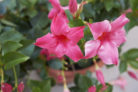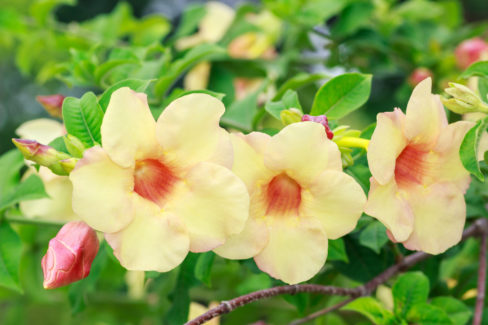
Dipladenia (also known as Mandevilla) is a total showstopper that turns any balcony or patio into a tropical paradise all summer long. If you’ve fallen in love with yours and want even more blooms without heading back to the garden center, you can actually propagate your own! Just a heads-up: you’ll need a little patience, as it takes a few months for those new cuttings to really take root.
Taking Your Cuttings
The best time to start your new balcony plants is in March or April. This timing is perfect because:
- You’ll likely have “tip cuttings” left over from your spring pruning.
- The plant is waking up and ready to grow.
To get the best results, here’s how to take your cuttings:
- Snip off an 8 to 10-centimeter (about 3-4 inch) piece from the tip of a healthy shoot.
- Make sure the piece has leaves and make your cut just below a leaf node (that little bump where leaves grow).
Planting the Cuttings
Once you’ve got your cuttings, it’s time to get them settled:
- Strip off the lower leaves, but make sure at least one pair of leaves remains at the top.
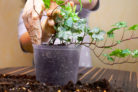
- Prep some seed trays or small starter pots.
- Fill them with coconut coir or a 50/50 mix of sand and peat.
- Stick your cuttings into the soil. Pro tip: dusting the cut end with a little rooting hormone can really help speed things up!
- Plant them just deep enough so the remaining leaves are poking out of the soil.
- Give the surface a light misting with water.
The Perfect Spot
For these little guys to grow roots, they need a “tropical” vibe—lots of light, warmth, and humidity. Your ideal location should be:
- Bright, but away from direct, scorching sunlight.
- Warm, with air and soil temperatures staying between 73°F and 80°F (23-27°C).
To create that essential greenhouse effect, you can:
- Use a dedicated indoor seed starter kit/mini-greenhouse.
- Or, simply pop a clear plastic bag over the pot and secure it with a rubber band.
Caring for Your Cuttings
The main goal here is keeping the soil moist without letting mold move in. High humidity is great, but it needs a little fresh air too.
- Every few days, take the plastic cover off for a bit to let the plants breathe.
- Mist the soil if it’s starting to look dry.
Alternatively, if you’ve got the humidity levels just right, you can leave the cover sealed for about four weeks.
Once you see new growth starting to sprout, you can leave the cover off for a few hours a day. When you see several healthy new shoots, the “training wheels” are off—you can remove the plastic for good!
Repotting Your New Plants
Once your cuttings have transformed into sturdy little plants, it’s time to repot them into their own small pots. From here on out, you can treat them just like your mature Mandevillas. Happy gardening!