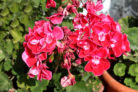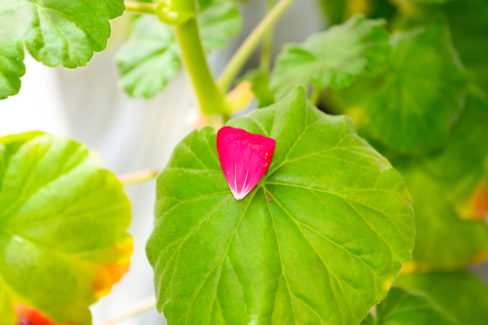
Let’s be honest: when it comes to geraniums, the leaves usually play second fiddle. It’s those vibrant, show-stopping blooms that grab all the attention. But if you notice the foliage starting to turn yellow right in the middle of the growing season, it’s time to stop and take a closer look.
Yellow Leaves Usually Mean a Deficiency
When we see yellowing leaves, our minds usually jump straight to drought, diseases, or pests. While those are fair guesses, most of the time, they aren’t the actual culprit. In the vast majority of cases, yellow leaves are simply a sign that your plant isn’t getting the nutrients it needs.
Usually, the plant is missing the trace element iron, which typically shows up first on the younger leaves. However, other missing elements can also cause this yellowing, known as chlorosis. Here’s a quick cheat sheet to help you diagnose the problem:
- Boron: You’ll see spots at the base of middle-aged leaves that spread along the veins.
- Copper: Spots start at the leaf base and work their way out to the edges.
- Magnesium: Older leaves start yellowing specifically between the leaf veins.
- Phosphorus: You’ll notice spots on the lower leaves that look more reddish-purple than yellow.
How Did My Plant Get So Hungry?
All geranium varieties are what we gardeners call “heavy feeders.” This means they need a ton of nutrients and trace elements during their peak growing phase. Since they’re stuck in the soil of their pots or balcony boxes, they only have access to whatever is in that limited space. If you aren’t fertilizing regularly, they’ll eventually run out of “fuel,” leading to that slow decline.
But here’s the kicker: just fertilizing isn’t enough—you have to use the *right* stuff. If you’ve been grabbing any old bottle of fertilizer off the shelf, your plants might be paying the price. From now on, stick to a specialized geranium fertilizer or a high-quality liquid fertilizer designed for flowering plants.
Pro Tip:
If you’re looking for alternatives, “Blaukorn” (nitrophoska) or even coffee grounds from your kitchen make excellent nutrient boosters for your geraniums.
Fixing the Problem ASAP
Once you’ve identified the deficiency, you need to act fast. In addition to starting a better regular feeding routine, you should give the affected plants a targeted dose of whatever they’re missing. For example, if it’s an iron deficiency, pick up a specific iron supplement at the garden center. Your plants will bounce back, but be patient—it usually takes a few weeks to see those lush green leaves return!