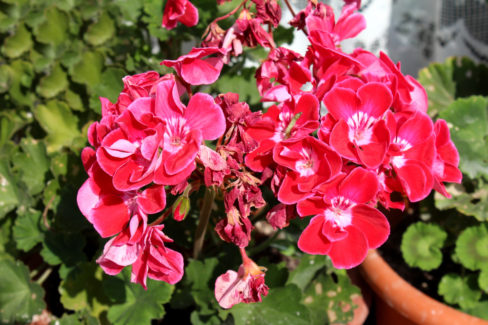
Healthy geraniums are absolute rockstars in the garden, pumping out more blooms than almost any other plant. But when things get a little swampy or they aren’t getting the right TLC, diseases can start to creep in. The good news? Your geraniums are pretty vocal—they’ll give you clear signs when they’re feeling under the weather.
The Big Three: Common Geranium Diseases
Most of the trouble comes down to bacteria and fungi. Here are the three usual suspects you’ll run into:
- Geranium Rust
- Gray Mold (Botrytis)
- Bacterial Wilt
Quick Tip:
If you see yellowing leaves, don’t panic—it’s rarely a disease. Usually, it’s just a hidden nutrient deficiency. Most of the time, your plant is just craving some iron. Once you give it a little boost, it should bounce back in just a few weeks.
Geranium Rust
Technically, what we call “geraniums” are actually Pelargoniums, but since everyone uses the common name, we’ll stick with it! Rust is a fungal hitchhiker that arrives via rain or splashing water. You’ll know you have it if you spot:
- Brown spots on the tops of the leaves
- Brownish or yellowish pustules on the undersides
Rust is super contagious. If you see it, move that plant away from its neighbors immediately and trim off any leaves showing symptoms.
Gray Mold (Botrytis)
If your geraniums look a bit fuzzy, you’re likely dealing with a fungus called Botrytis. This guy loves high humidity, overwatering, or long stretches of rainy weather. Lack of light and “wounds” from pruning can also open the door for it. Look for:
- Grayish-black spots
- A fuzzy gray fungal coating
- General rotting of the stems or flowers
To stop the spread, snip off any affected parts right away.
Bacterial Wilt
This one is caused by bacteria rather than fungus. It causes stems to wilt and turn black, and in the worst cases, it can kill the whole plant. Like the others, moisture is the main culprit here, but over-fertilizing and accidental nicks to the plant can also make it worse. Since wilt spreads fast, isolate the plant and prune back any drooping or blackened sections.
How to Prevent Disease
Since moisture is the common denominator for all three of these issues, prevention is all about water management.
- Give them a sunny spot.
- If possible, keep them under a roof or awning to protect them from heavy rain.
- Always water at the base—try to keep the leaves and flowers dry.
- Avoid “wet feet” by using pots with large drainage holes and a good drainage layer.
- Whenever you’re pruning, make sure your shears are sharp and sterilized.
Pro-Tip:
Don’t forget to “deadhead” (remove) spent blooms regularly. Old flowers can get moldy fast when they get wet, which can spread to the healthy green parts of your plant.
Other Geranium Issues
Every now and then, Powdery Mildew might stop by. Downy Mildew is the “bad” version—it often kills the plant, so you’ll need to toss it before it infects your whole collection. If you see regular Powdery Mildew, act fast by removing the sick leaves. You can also spray the plant with a store-bought fungicide or a solid home remedy. Also, when planting, give them some elbow room so air can circulate and dry them out.
Lastly, if you see weird, corky bumps on the leaves, that’s usually just “edema” caused by too much water and cool, cloudy weather. It’s purely cosmetic, so don’t worry—your plant is still healthy!