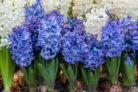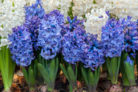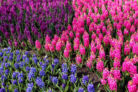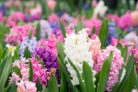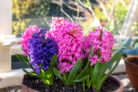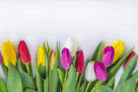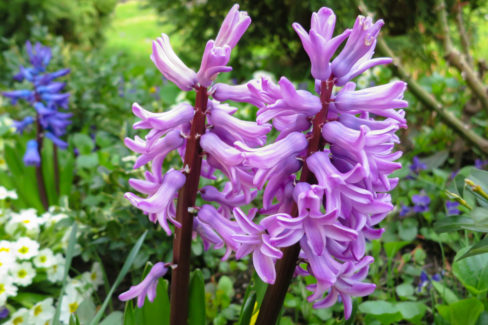
Whether you’re looking for vibrant yellows, oranges, reds, blues, whites, or even a moody black, hyacinths have you covered with over 100 different varieties. Do you have a personal favorite yet? If not, stick around—you might just discover a new garden staple in our guide. Let’s dive in!
The Basics
In the world of botany, the Hyacinth family (*Hyacinthus*)—which is actually a cousin to asparagus (*Asparagaceae*)—is divided into three main species. These beauties are native to a wide range of climates, stretching from the Mediterranean and North Africa across Europe all the way to the Himalayas. However, here in our neck of the woods, only one of these species is really hardy enough to handle the local weather. But don’t worry! That one species has been bred into so many different cultivars that you’ll still have plenty of colors and shapes to choose from.
The Three Main Hyacinth Species
- Hyacinthus litwinovii
- Hyacinthus orientalis
- Hyacinthus transcaspicus
Hyacinthus litwinovii
This species calls Turkmenistan and northern Iran home. It’s a total sun-worshipper and thrives best under bright, direct sunlight.
Hyacinthus transcaspicus
Just like its cousin above, this one finds Central Europe and much of North America a bit too chilly. You’ll mostly find *Hyacinthus transcaspicus* growing wild from Turkmenistan to western Iran.
Hyacinthus orientalis
Now, this is the one you likely already have blooming in your flower beds! But even within this group, there’s a specific distinction to make. Only hyacinths with the Latin tag *subsp. orientalis* are truly successful in our latitudes. This species originally hails from Turkey.
Varieties of Hyacinthus orientalis subsp. orientalis
If you’re looking to add some *Hyacinthus orientalis subsp. orientalis* to your own garden, you’ve got a rainbow of colors to pick from. The one thing they all have in common? That incredible, heady fragrance that draws in every insect in the neighborhood. Just a heads-up, though: not every variety is a great nectar source. Many modern hybrids have “double” (filled) flowers, which look stunning but can be harder for pollinators to navigate.
Here’s a quick cheat sheet of some popular varieties:
Purple Varieties
- Anastasia (light violet), single bloom
- Crystal Palace (light violet), double bloom
- Peter Stuyvesant (bluish-purple), single bloom
- General Köhler (bluish-purple), double bloom
Red & Pink Varieties
- Freestyler (rosy pink), single bloom
- Odysseus (orange-red), single bloom
- Prince of Love (pink), double bloom
- Holly Hock (red), double bloom
White Varieties
- Snow Crystal, single bloom
Quick Tip: Way back in ancient times, people called the hyacinth the “Blue Star.” Blue was likely the original color of the plant in the wild. You can still find these wild-type varieties today—they don’t grow quite as tall as the fancy nursery hybrids, but they have a lovely, natural charm.