Sweet Woodruff (Waldmeister) is a total favorite for gardeners and foragers alike, mostly thanks to its iconic aroma. Whether you’re using it in the kitchen or for its natural medicinal properties, it’s a great plant to know. Plus, if you’re out for a hike, it’s actually pretty easy to spot in the wild once you know what to look for!
How to Identify Sweet Woodruff
The good news is that there’s very little risk of mixing up Sweet Woodruff with other green herbs. Even in the wild, it stands out from the crowd. To identify it like a pro, you just need to keep an eye on three things:
- Its growth habit,
- The flowers,
- And that unmistakable scent.
Growth Habit
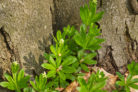
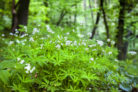
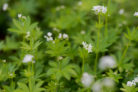
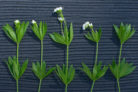
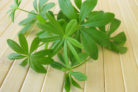
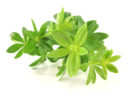
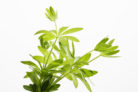
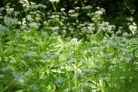
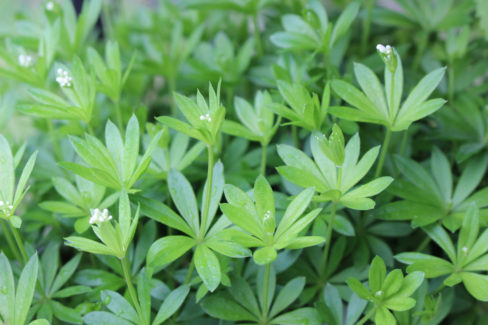
Sweet Woodruff is a classic groundcover. In the wild, it loves to form lush green carpets across the forest floor. It spreads through underground runners and propagates itself via self-seeding. If you look closely at the plant, you’ll notice the stems are thin, green, and distinctly square-shaped, with narrow green leaves branching out.
The Flowers
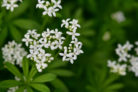
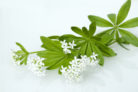
Come springtime, Sweet Woodruff puts on a show with tiny, bright white blossoms. The blooming season usually kicks off in April and can last through May or even June. Each tiny flower is shaped like a little cross—it’s super cute if you take a second to look closely! Since it grows in large patches, it’s easiest to find when it’s blooming. That “sea of white” on the forest floor is a dead giveaway.
That Signature Aroma
Sweet Woodruff has a very specific, aromatic scent and flavor. If you’re ever unsure, here’s a quick tip: pick a stem, rub it between your palms for a second, and take a sniff. That classic “Waldmeister” smell is unmistakable and is the best way to confirm you’ve found the right plant.
Ways to Use Sweet Woodruff
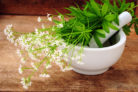
It’s that unique aroma that makes this herb such a star in the kitchen. There are so many ways to use it, such as:
- Making the famous “May Wine” punch,
- Flavoring water or other refreshing drinks,
- Whipping up homemade soda or herbal tea,
- Or crafting your own Sweet Woodruff syrup.
This is just the tip of the iceberg when it comes to what you can do with it! Just a quick heads-up for your prep: if you’re steeping it in hot water, keep it brief. You don’t want to let the plant sit in your drink for too long, as it can release high levels of coumarin, which isn’t great for you in large amounts. Keep it quick, keep it fresh, and enjoy!