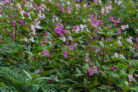
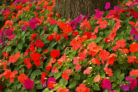
Not all jewelweeds (botanically known as *Impatiens*) deserve a bad reputation, but there’s one variety that hides a nasty “weed” side behind its pretty blossoms. If you don’t want your flower beds completely overrun by its offspring, you’ll need to know how to spot this garden invader and, more importantly, how to stop it.
Himalayan Balsam: The Beautiful Invader
While its scientific name is *Impatiens glandulifera*, you might know it as Himalayan Balsam, Policeman’s Helmet, or Ornamental Jewelweed. In some circles, its elegant blooms have even earned it the nickname “Poor Man’s Orchid.”
In many regions, Himalayan Balsam has become a problematic invasive species because it spreads at lightning speed. It’s a bit of a bully, crowding out native plants and taking over their territory. Here’s the kicker: a single plant can produce up to 2,000 seeds. When those seed pods ripen, they explode, launching seeds up to 23 feet away! If there’s a stream or creek nearby, the water carries them even further. Since the seeds can stay viable for years, this plant is on a mission to conquer.
Spotting Himalayan Balsam in Your Yard
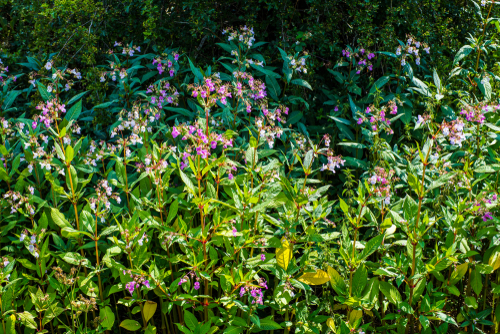
Because it’s so prolific, this weed loves to hitchhike into home gardens. The longer it goes unnoticed, the harder it is to get rid of. Keep an eye out for these characteristics:
- It can tower up to 6 or 7 feet tall.
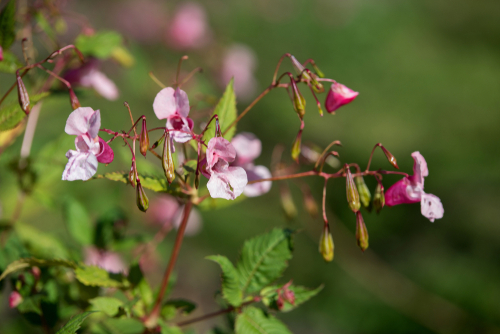
- The long stems often have a reddish tint.
- Stems are highly branched near the top.
- The green leaves have distinct serrated (toothed) edges.
- It blooms from July through October.
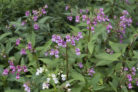
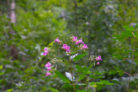
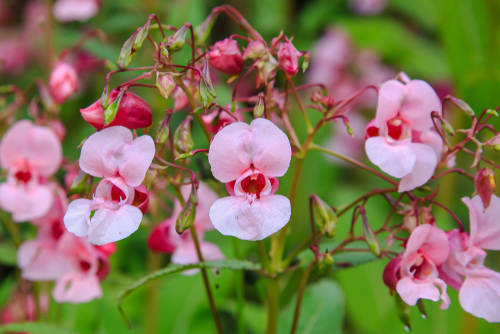
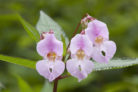
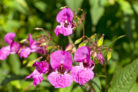
- The flowers range from pale pink to deep purple and look like tiny orchids.
- Flowers grow in clusters and have a sweet, heavy scent.
Quick Tip:
If you’re facing an invasion, there might be a silver lining. Just like its cousins, the Busy Lizzie and New Guinea Impatiens, this plant is actually edible. The flowers have a sweet taste, and the seeds have a pleasant, nutty flavor.
How to Get Rid of Himalayan Balsam
Even though Himalayan Balsam is an annual, it reseeds so aggressively that it doesn’t just come back every year—it multiplies. To win the battle, you have to focus on the seeds.
- Stop the seeds at all costs: This is your number one priority.
- Pull them early: Get these plants out of your beds by July at the latest.
- Yank ’em out: They are easy to pull by hand, especially in moist soil. Make sure to get the roots.
- Mow large areas: If you have a massive patch, mow it down before the seed pods develop.
- Dispose properly: Put the pulled plants in your trash, not your compost pile. The seeds are tough enough to survive the composting process.
- Starve them out: Avoid watering or fertilizing areas where this weed has taken hold.