When most gardeners hear the word “Impatiens,” they usually think of the colorful “Busy Lizzies” in their flower beds. But there’s another family member that’s been making a name for itself lately: Himalayan Balsam. It’s often just called “Touch-Me-Not” or “Springweed,” mostly because of the incredible “springing power” of its seeds that causes us so much trouble! But hey, it’s not all bad news—there are actually a few cool things to know about this tall traveler.
Quick Facts
- Family: Balsaminaceae
- Scientific Name: *Impatiens glandulifera*
- Common Names: Himalayan Balsam, Policeman’s Helmet, Ornamental Jewelweed, Indian Balsam
- Origin: Himalayan region of Southern Asia
- Life Cycle: Annual
- Light: Full sun to deep shade
- Soil: Moist, nutrient-rich
- Growth: Up to 6-10 feet tall
- Bloom Time: July to October
- Propagation: Self-seeding (explosively!)
Appearance and Key Features
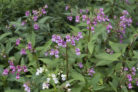
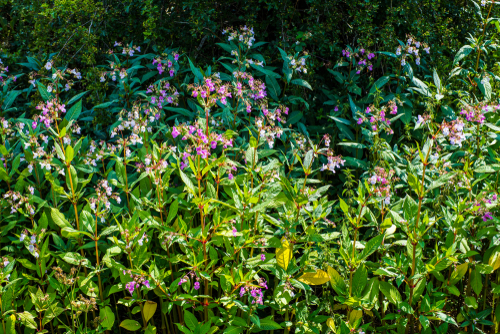
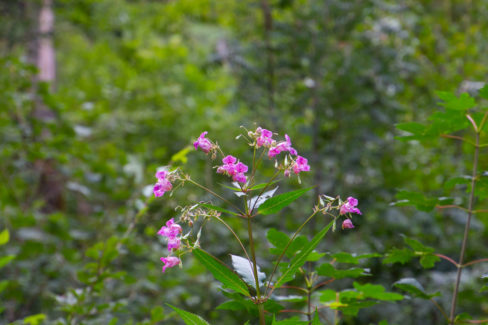
Himalayan Balsam is what we call a “neophyte”—a plant that has settled in a new region outside its original home. Because it loves our local conditions and reproduces like crazy, it’s spreading fast, often crowding out native plants in the wild and taking over backyard gardens. Besides its impressive height, here’s how you can spot it:
- Long, hollow stems with a reddish tint
- Highly branched upper stems
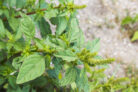
- Green leaves with serrated (toothed) edges
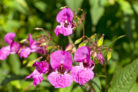
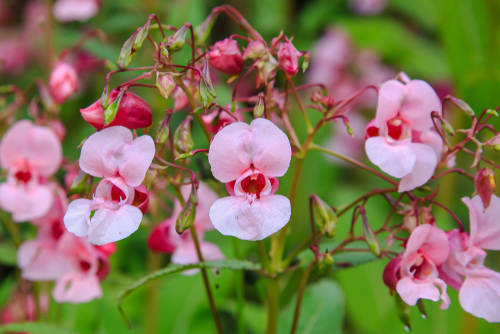
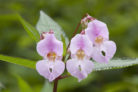
- Pink or purple flowers that look a bit like orchids
- Flower clusters (racemes) with multiple blooms
- A distinct, sweet scent
A Weed in the Garden and the Wild
The “funny” thing about this plant is that you don’t have to lift a finger for it to thrive. At first, you might admire the pretty flowers—and the bees certainly love them—but it won’t take long to realize that Himalayan Balsam is a major weed. It spreads so aggressively that it can quickly smother your favorite perennials. In the wild, this “invasion” is a serious problem that’s nearly impossible to stop because:
- A single plant can produce up to 2,000 seeds
- The seed pods explode when touched or ripe
- Seeds can be launched up to 23 feet away
- If it grows near water, the seeds travel even further downstream
- The seeds can stay viable in the soil for several years
How to Control It
The goal of controlling this plant is to stop it from setting seeds. In your own garden, the best way is to pull the plants out by the roots before they flower and toss them in the trash (not the compost!). For larger areas, mowing can work. While herbicides are an option, they aren’t great for the environment or your health, so mechanical removal is usually the better way to go.
Pro Tip:
Avoid watering or fertilizing areas where you see Himalayan Balsam popping up. It thrives on moisture and nutrients, so keeping things lean can help stunt its growth.
Is it Edible?
Here’s a fun twist: while the raw leaves and stems are slightly toxic (and don’t taste great anyway), the flowers and seeds are a different story. Not only are they completely edible, but they actually taste good! The flowers have a subtle sweetness, and the seeds have a lovely nutty flavor. Just make sure you’ve identified the plant correctly before snacking!