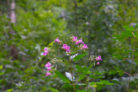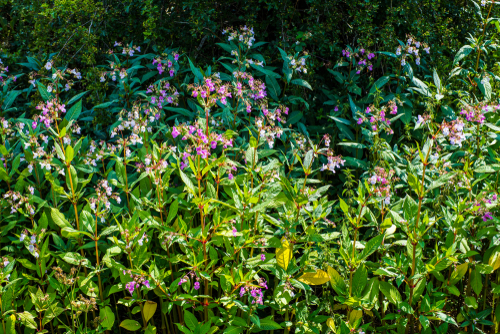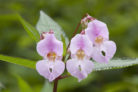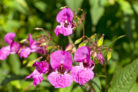
You’ll find quite a few varieties of Jewelweed (Impatiens) popping up these days. They aren’t just hanging out in backyard gardens; they’re all over the wild, especially near water. Even though they have gorgeous blooms, these annuals are often considered a pesky weed, and many folks spend a lot of time trying to keep them under control.
Quick Facts: Himalayan Balsam (Impatiens glandulifera)
Here’s the lowdown:
- Family: Balsaminaceae (Touch-me-not family)
- Origin: Central Asia
- Life Cycle: Annual
- Growth: Upright, reaching up to 6.5 feet tall
- Leaves: Green, lance-shaped, and serrated
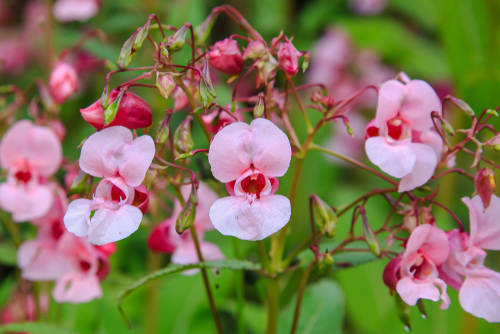
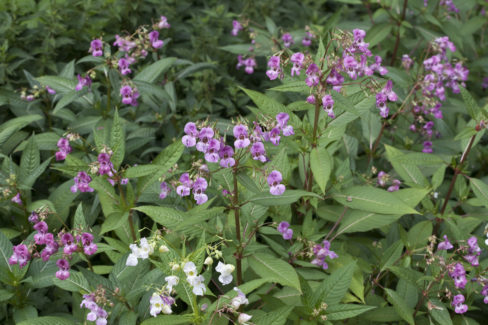
- Flowers: Pink, cluster-like, and fragrant
- Fruit: Seed capsules
- Seeds: Round, brownish-black, and edible
- Propagation: Self-seeding
- Light: Full sun to shade
- Soil: Moist and nutrient-rich
- Maintenance: None needed (it grows like crazy on its own!)
- Fun Facts: Invasive species (neophyte), huge nectar source for bees, but the plant itself is toxic if eaten raw
Where You’ll Spot Himalayan Balsam
Himalayan Balsam (a type of Impatiens) absolutely loves “wet feet.” It thrives in damp spots and doesn’t mind soggy soil one bit. It also has a bit of a sweet tooth for nutrient-rich dirt. That’s why you’ll mostly see it in damp woodlands, parks, along riverbanks and lakeshores, lining hiking trails, or taking over vacant lots.
What It Looks Like: How to Identify It
Himalayan Balsam grows tall and proud from a shallow root system. The stems are pale green, round, and start to branch out toward the top.
The leaves are lance-shaped and can grow up to 10 inches long. They have serrated edges and grow in opposite pairs along the stems, which can tower up to 6 or 7 feet high.
The flowers—ranging from 1 to 1.5 inches long—are what turn this weed into a surprisingly pretty ornamental plant. They grow in clusters of up to 15 blossoms, packed with nectar that makes them a magnet for bees and butterflies. Usually, they’re a lovely shade of pink and have a sweet, floral scent. You can catch them in bloom from late June all the way through October.
Yes, the Seeds are Edible!
The seed capsules are pretty fascinating and a huge hit with kids. When the seeds ripen in the fall, the pods become “explosive”—the slightest touch makes them burst open, launching seeds up to 20 feet away!
Each capsule is about half an inch long and holds roughly 15 seeds. The seeds themselves are tiny (about 3mm) and brownish-black. Unlike the rest of the plant, the seeds are non-toxic and edible. They actually have a really pleasant, nutty flavor!