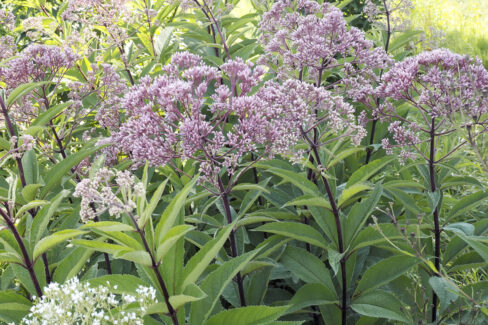
Joe-Pye Weed (also known as Water Hemp or Hemp-agrimony) is a total superstar for those tricky, soggy spots in your yard. Its nicknames actually come from its love for hanging out near lakes and streams. If you’ve got a damp area that needs some color, this is your plant!
Where Joe-Pye Weed Feels at Home
In the wild, Joe-Pye Weed is a true wetland lover. It thrives in cool, damp environments where other plants might get “cold feet.” You’ll usually spot it growing naturally in:
- Shady, moist forest clearings
- Airy floodplain forests
- Along the banks of creeks, ponds, and rivers
- Natural marshes and bogs
Keep it Thirsty!
When you’re adding Joe-Pye Weed to your own garden, try to mimic those natural vibes. Look for the dampest spots you have. It’s a fantastic choice for heavy, clay-rich soil where other plants struggle to grow. If you’re lucky enough to have a backyard pond, that’s the absolute perfect home for it.
If your garden doesn’t have a naturally soggy corner, don’t worry—you can still grow it! Just be prepared to give it plenty of water. You’ll need to be extra diligent during those hot, dry summer days, but honestly, keeping the soil consistently moist year-round is the secret to getting those magnificent, towering blooms.
Sun or Shade?
Joe-Pye Weed is happiest in partial to full shade. While it *can* handle a sunny spot, there’s a catch: the soil has to stay incredibly wet. If it’s sitting in the baking sun without enough water, it’ll dry out faster than you can grab your watering can.
Pro Tip: Watch Out for the Wind
Because Joe-Pye Weed grows on tall, somewhat slender stems, a strong gust of wind can be its worst enemy. If you’re planting it in an open area, it’s a good idea to stake the stems for support. Alternatively, you can plant it near larger shrubs or trees. These act as a natural windbreak, shielding your Joe-Pye Weed from the brunt of the breeze.
What Happens in Dry Soil?
Technically, you *can* plant Joe-Pye Weed in standard garden beds or perennial borders with drier soil. It’s a hardy survivor and will likely pull through, but it won’t be the showstopper it’s meant to be. In dry conditions, the plant stays much shorter and more compact, losing that impressive, airy height it’s famous for.