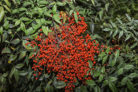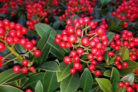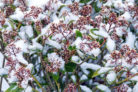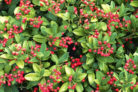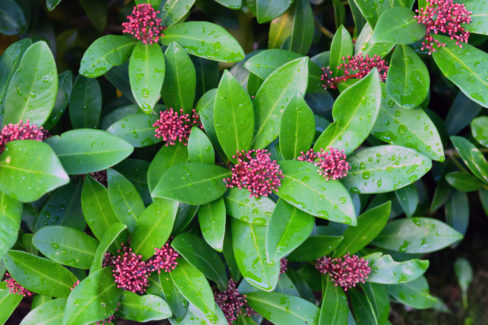
If you pick the wrong spot for your Skimmia, its already slow growth will grind to a complete halt. Even worse? You’ll be left with a pretty pathetic flowering season. When it comes to planting these beauties, location is everything. So, how do you make the right call?
Straight from the Mountain Forests of Japan
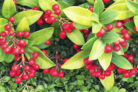
Skimmia (botanically known as *Skimmia japonica*) hails from the airy mountain forests of Japan. In their natural habitat, towering trees act as a giant umbrella, filtering out harsh direct sunlight while still letting plenty of brightness through. Now, I know your backyard might not exactly be a Japanese mountain range, but that doesn’t mean you can’t grow them! You just have to make sure your garden can mimic those cozy, forest-floor conditions.
Avoid the “Sun-Bathing” Spots
If your Skimmia gets hit by unfiltered, direct sun, it’s going to show its stress pretty quickly. The leaves will start to curl and lose that gorgeous deep green, turning a sickly yellow instead. Your evergreen shrub will end up looking like a deciduous tree in the middle of autumn. Once the damage is done, there’s not much you can do to save its looks other than moving it immediately. But be careful—transplanting can be risky and might weaken the plant even more. Save yourself the headache and keep it away from those sunny hotspots!
Full Shade: The Bloom Thief
On the flip side, while a deep-shade spot won’t give your plant yellow leaves, it will rob you of those beautiful flowers. If you get any blooms at all, they’ll be few and far between. And since no flowers means no berries, you’ll miss out on those iconic red pops of color in the winter.
Finding the “Goldilocks” Zone
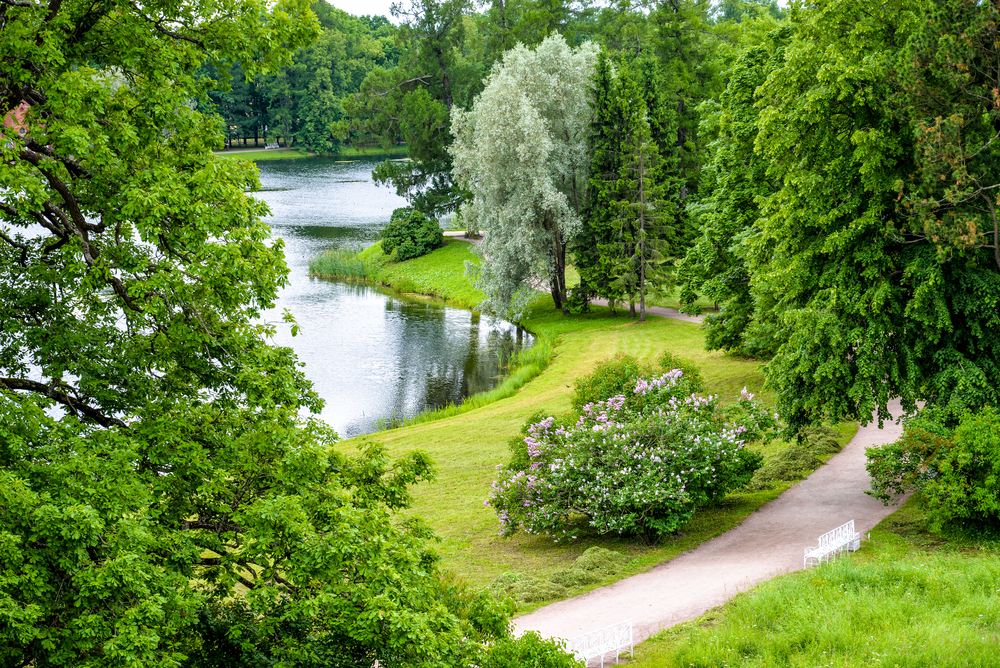
The “just right” spot for a Skimmia is somewhere with no direct sun but plenty of ambient light. This partial-shade sweet spot is usually found under the canopy of larger trees. If your garden beds don’t offer that kind of protection, don’t worry! Here’s a great workaround:
- Grow your Skimmia in a pot.
- This keeps the plant mobile so you can move it as the light changes.
- You can tuck it right up against a north-facing wall for perfect shade.
Just keep in mind that container plants need a bit more love when it comes to watering and fertilizing during the growing season. Luckily, pruning stays minimal, and since Skimmia is hardy, it can stay outside all winter long.
The Perfect Soil for Skimmia
This Japanese mountain native is a bit of a “lime-hater,” so you’ll want soil with an acidic pH. It also thrives in ground that is loose, well-draining, and rich in organic matter (humus).
Pro Tip:
Try planting your Skimmia under evergreen or needle-bearing trees. As the needles fall and decompose, they naturally help keep the soil acidic—exactly the way your Skimmia likes it!