
Looking for a privacy screen that doesn’t take up your entire yard? You’re in the right place! Evergreen hedges that stay slim are the holy grail of landscaping—they give you year-round greenery without crowding your outdoor space. Here’s a breakdown of the best narrow-growing plants to help you find the perfect fit for your garden.
[[pflanzen]]
++Hicks Yew (Taxus media)
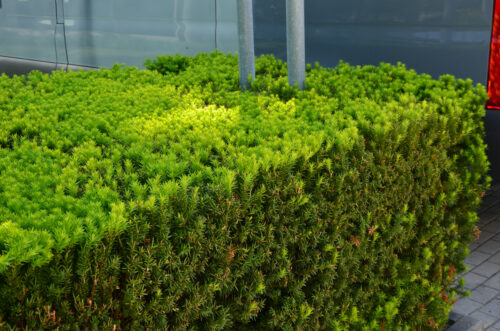
The Hicks Yew is a fantastic choice if you want a dense, upright screen. Its dark green needles stay lush all year, providing excellent privacy. One of the best things about yews is how well they handle pruning—you can keep them looking very neat and formal. Just a heads-up for parents and pet owners: almost all parts of the yew are toxic. Make sure little ones don’t play unsupervised near the hedge, and it’s a good idea to wear gloves and long sleeves when you’re trimming it back.
++Yellow Lawson Cypress (Chamaecyparis lawsoniana)
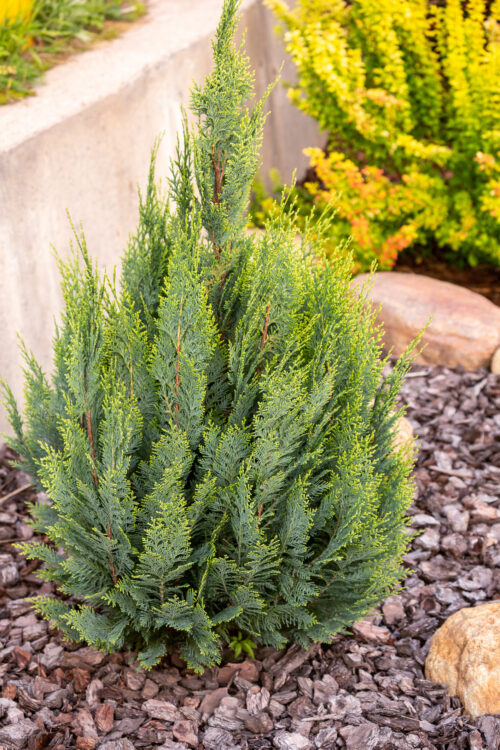
If you love that classic Mediterranean look, the Yellow Lawson Cypress is for you. It has that elegant, slender silhouette that sways beautifully in the breeze—it’s actually quite relaxing to watch! By following the right planting spacing, you can create a low-maintenance, narrow hedge that really stands out. Plus, that golden-yellow foliage adds a gorgeous pop of color that brightens up any landscape.
++Japanese Holly (Ilex crenata)
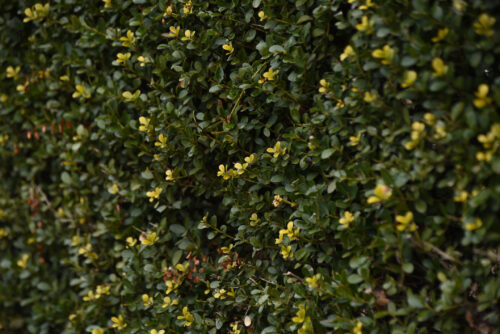
Japanese Holly is a wonderful alternative if you want a narrow, evergreen hedge with a leafier look. It features small, glossy leaves and dark berries (though you’ll usually only see those on the female plants). It’s an incredibly hardy shrub and a great “problem solver” because it isn’t as prone to the fungal diseases that often plague Boxwoods. It stays tight and tidy with very little effort.
++Juniper (Juniperus)
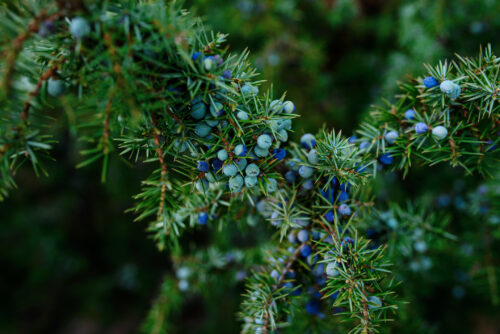
Juniper is a go-to for many gardeners looking for a slim profile. Not only do you get year-round needles, but you also get those iconic dark berries. These are a favorite snack for local birds, and if you’re into cooking (or home distilling), they’re the key ingredient for seasoning meats or even making your own gin! Junipers are super flexible when it comes to lighting, thriving in everything from full sun to partial shade.
++Arborvitae (Thuja)
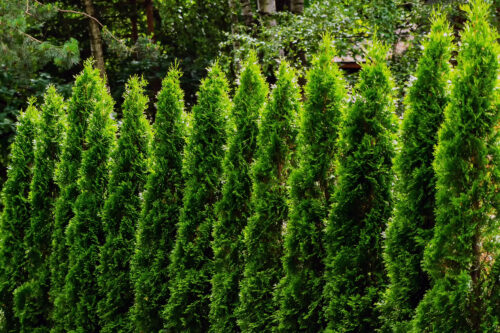
The Arborvitae (or “Tree of Life”) is a staple for a reason. It grows tall and narrow naturally, so it won’t eat up your lawn. It’s also very forgiving when it comes to pruning; as long as you trim at the right time, you can easily manage its height and shape. While its dense foliage doesn’t host as many insects as some other shrubs, it’s a reliable grower that performs beautifully when planted in the right spot.
++Cherry Laurel (Prunus laurocerasus)
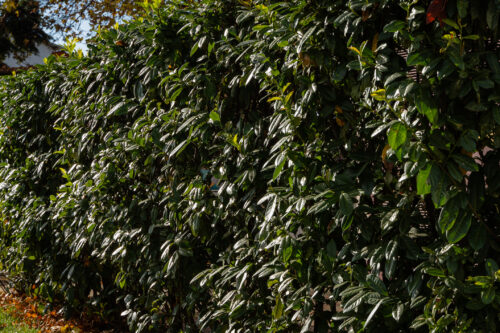
Cherry Laurel is a timeless classic. Those thick, leathery, matte-green leaves look great in any season and provide a solid wall of privacy. When it comes time to prune your laurel, I recommend using hand pruners rather than electric shears. Electric trimmers can shred the large leaves, leaving brown edges behind. It won’t hurt the plant, but it looks a bit messy until new growth covers it up!
++Boxwood (Buxus)
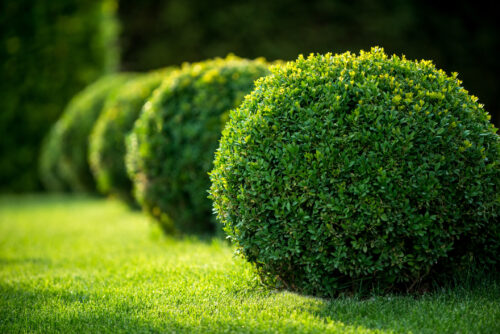
Even though Boxwoods can sometimes be finicky with blight, they remain one of the most popular choices for a reason. They have a sophisticated look and can be sheared into almost any shape—from spheres and pyramids to perfectly straight narrow walls. Because they are slow-growing and stay compact, they are ideal for tight spaces where you want a clean, manicured look.
%%Red Tip Photinia (Photinia)
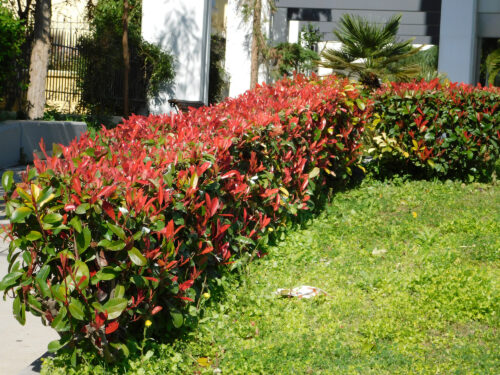
If you want a narrow hedge with leaves instead of needles, Photinia is my “insider tip.” It’s hardy, evergreen, and grows with a dense, branched structure that’s perfect for blocking prying eyes. It’s especially famous for its bright red new growth in the spring, which eventually matures into a deep, glossy green. It’s a hardworking plant that looks stunning as a boundary marker.