If you’ve noticed your lawn or garden looking a little worse for wear lately, you might have some uninvited guests underground. But don’t reach for the harsh chemicals just yet! You can tackle grubs naturally by enlisting the help of some tiny garden superheroes: nematodes. These beneficial organisms are a fantastic, organic way to keep grub populations in check.
What Exactly Are Grubs?
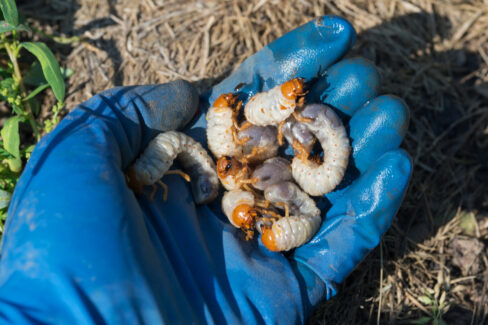
Grubs (or “Engerlinge” as they’re known in German) are the C-shaped larvae of beetles from the *Scarabaeoidea* family. While many types of grubs are harmless and just part of a healthy ecosystem, there are a few troublemakers that can wreak havoc on your backyard. The main culprits you need to watch out for are the larvae of:
- May beetles (Cockchafers),
- June bugs,
- and Garden chafers.
How Grubs Damage Your Garden
These little larvae live underground and feast on plant roots, which cuts off the plant’s ability to take in water and nutrients. If you have a major infestation, it can actually kill the entire plant. And they aren’t picky eaters, either—grubs will happily munch on your lawn, your vegetable patch, and your favorite ornamental flowers.
Signs You Have a Grub Problem
Since grubs stay hidden in the soil, you have to look for clues above ground. If your plants look wilted or dried out even though you’ve been watering them regularly, that’s a red flag. In lawns, a grub infestation usually shows up as yellow patches of grass that pull up easily by hand—almost like a piece of loose carpet—because the roots have been eaten away.
Taking Control of the Situation
If you spot grubs while digging, the first step is to manually pick them out and remove them. But since you can’t see every larva hiding under the surface, using nematodes is the smartest way to ensure you get the whole colony.
What Are Nematodes?
Nematodes are microscopic roundworms. Now, some types of nematodes are actually pests that can hurt crops, but don’t worry—the ones we use for pest control are “beneficial nematodes.” These specific species are completely harmless to your plants, pets, and family, but they are deadly to grubs.
How to Use Nematodes Against Grubs
You can find beneficial nematodes at most garden centers or online. They usually come in a powder or clay-based granulate. To use them, you simply mix them into your watering can and apply the solution to the soil.
Once they’re in the ground, these tiny worms seek out the grubs and use them as hosts to reproduce. They release a specific bacteria that naturally eliminates the grub. Just water the solution into the soil around your affected plants, and the nematodes will do the hard work for you! The dead grubs will eventually decompose naturally in the soil, or you can pick them out if you happen to find them while gardening.