Stop! Before you reach for those harsh chemicals, let’s take a breath. Even if you’ve spotted hundreds of little green caterpillars hiding in your boxwoods, you don’t want to go nuclear right away. While pesticides are effective, boxwoods can be surprisingly sensitive to them. Instead, why not try some tried-and-true home remedies first?
Spotting a Box Tree Moth Infestation
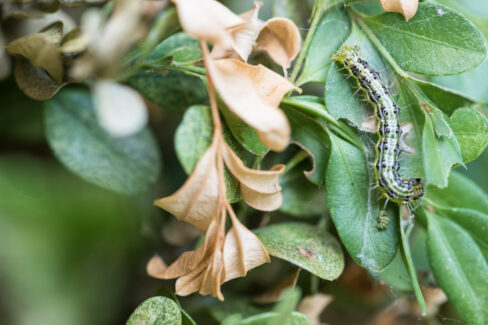
The tricky thing about these caterpillars is that they start deep inside the shrub and eat their way out. As long as the outer leaves stay green and lush, you might not even notice they’re there. Since they usually show up in huge numbers, they can strip a bush bare in no time. That’s why every boxwood owner should be on high alert. Starting in early spring, peek inside the crown of your plants for 2-inch long, green caterpillars with dark patterns. Don’t wait until you see these symptoms:
- Chewed-up leaves
- Leaves stripped down to the “skeleton”
- Fine white webbing inside the branches
- Little dark droppings on the leaves
- Yellow or brown leaf spots
Hand-Picking
It’s the same strategy we use for slugs: good old-fashioned hand-picking. These caterpillars are big enough to grab easily. Just make sure to wear gloves! What you do with them afterward is up to you, but one thing is for sure—they’ve got to go far away from your garden.
The Vacuum Method
If you’re dealing with a massive invasion, picking them off one by one can take forever. If you have a leaf vacuum and your boxwood is sturdy enough, try vacuuming the pests away. Gently pull the branches apart to get into the center of the plant. Just be sure to double-check the shrub afterward to catch any stragglers.
The Power Wash
A pressure washer can be a great ally by “sweeping” the caterpillars off the branches with a blast of water. Only do this if your boxwood is large and established enough to handle the pressure.
- Spread a large tarp or sheet under the plant.
- Weight down the edges with stones.
- Hold the nozzle horizontally.
- Start with low pressure and slowly increase it to a safe level.
- Spray evenly from top to bottom.
- Aim for both the tops and bottoms of the leaves.
- Collect and dispose of the caterpillars immediately.
- Repeat the process every three days for best results.
Pro Tip:
Before using the pressure washer, you can spray the boxwood with a mixture of equal parts oil, vinegar, and water. Let it sit for about 30 minutes. The vinegar makes the leaves taste terrible, while the oil coats the caterpillars and makes it harder for them to breathe. This makes them much easier to wash away!
Baking Powder
When you combine baking powder, moisture, and heat, it’s bad news for caterpillars. Wait for a day when it’s at least 82°F (28°C). Dissolve two standard packets of baking powder in a quart of water and give your boxwood a thorough soak with the spray. Repeat the process after three days.
The Black Trash Bag Trick
If the sun is out and your boxwood is small, try this: in the morning, slip a black plastic bag over the crown and tie it at the bottom. The heat will build up under the plastic and kill the caterpillars within a few hours. Just make sure to water the soil well beforehand so the plant doesn’t dry out. Remove the bag in the evening. You’ll need to repeat this several times over two weeks to catch any newly hatched larvae.
Garden Lime (Algae Lime)
Algae lime is a popular fertilizer for boxwoods because they love calcium. But if you dust the foliage generously with this fine powder, it’s also said to fight off pests and blight. It’s believed to kill off both the caterpillars and their eggs.
The Radical Prune
If your boxwood is already looking pretty rough, it might need a “haircut” to survive. Grab your shears and cut it back hard—even into the old wood. Spread a tarp down first so you can catch every single clipping. Afterward, give it some high-quality fertilizer and plenty of water. Then, we cross our fingers and hope for new growth! If it doesn’t bounce back, you’ll need to remove it entirely to keep the infestation from spreading. Put the plant and the clippings in the regular trash—never compost infested boxwood parts!
Prevention is Key
Since an infestation can totally ruin a plant, prevention is your best friend. When buying new plants, ask which varieties are more resistant. In the spring, once temperatures stay above 45°F (7°C), you can cover your boxwoods with a fine mesh net. This stops the moths from laying eggs. Ideally, keep the net on until fall, since they lay eggs several times a year. If you don’t like the “netted look,” you can use pheromone traps to monitor when the moths are active. Either way, keep checking your plants regularly!
Pro Tip:
It took them a while to figure it out, but local birds have finally realized these caterpillars are delicious! If you make your garden bird-friendly for finches, redstarts, chickadees, and sparrows, they’ll do the hunting for you.