One of the best things about oak trees is that they’re total pros when it comes to handling cold winters. If you’ve got one in your yard or are thinking about planting one, here’s the lowdown on how much frost these beauties can take and how to keep them happy during the chilly months.
How much cold can an oak tree actually handle?
Native European oaks are incredibly tough, often surviving temperatures as low as -20 °F (-29 °C). While some varieties from Asia or other parts of North America can be a bit more sensitive, most will breeze through winter and bounce back with fresh growth in the spring. The secret? The tree does a little prep work before the first frost hits.
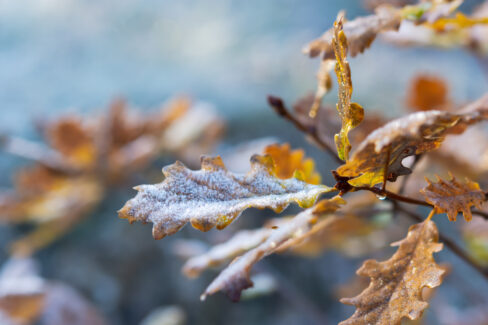
You’ve probably noticed that oak leaves turn a beautiful golden brown in the fall before slowly dropping. This isn’t just for show! Oak trees lose moisture through their leaves. During the summer, they can easily replace that water from the soil, but when the ground is frozen solid, they can’t “drink.” By dropping its leaves, the tree goes into survival mode to prevent drying out.
Just a heads-up: there are evergreen oak varieties out there, too. These guys are a bit more sensitive to the cold but can still handle dips down to about 5 °F (-15 °C). If you’re planting an evergreen variety, try to pick a spot shielded from the wind and give it a little extra TLC before winter sets in.
Winter prep: How to help your tree
It’s not just the sensitive varieties that need a hand. If you’ve recently planted an oak, you’ll want to give it some extra protection. Young trees haven’t established a deep, sturdy root system yet, making them more vulnerable than the big guys.
Here’s how to tuck your oak in for the winter:
- Spread a thick layer of mulch or fallen leaves around the base of the trunk.
- Use a small fence or lay down some brushwood/evergreen branches over the leaves.
- This keeps the “blanket” of leaves from blowing away in winter storms.
The good news? Once your oak is fully grown, you can cross these chores off your list. Mature trees are incredibly self-sufficient. But while they’re still “teenagers,” remember that they aren’t quite as hardy as fully grown oaks, so a little extra help goes a long way!