Violets, or *Viola* if you want to get fancy, are part of the Violaceae family. While they originally hailed from the Mediterranean, they’ve made themselves right at home across Europe, North America, and Japan. Since they generally prefer a temperate climate, many gardeners wonder: can these little beauties actually survive a cold winter?
Are Violets Winter-Hardy or Do They Need a Little TLC?
Most violet species handle a typical winter just fine, and some hybrid varieties can even shrug off temperatures as low as 5°F (-15°C). However, if you’ve got a variety imported from a warmer region, it might struggle when the mercury drops. Even among our local favorites, there are differences. For example, pansies are a bit more sensitive, while horned violets and sweet violets are much tougher.
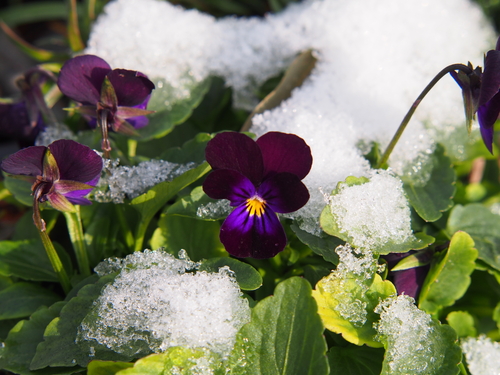
Horned and sweet violets are total pros at surviving heavy snow and long freezes. Their underground rhizomes stay tucked away safely in the soil, waiting for warmer days to pop back up. Some species are even evergreen, keeping their leaves visible all winter long. Interestingly, snow is actually a violet’s best friend—it acts like an insulating blanket and keeps things moist. The real danger is “black frost” (freezing cold without snow). When the ground freezes solid without a snow cover, the roots can’t soak up water, and the plant can actually die of thirst. Pro tip: if you have a frost-free day during a dry winter, give them a little drink!
Pansies are technically part of the violet family, but they aren’t quite as rugged. If you have them planted in your garden beds, they’ll need a cozy layer of protection starting in late fall. You can use materials like:
- Brushwood
- Pine or fir branches
- Evergreen boughs (spruce or yew)
- Dried leaves
- Moss
- Garden fleece
Avoid using plastic tarps or waterproof films. They don’t breathe, which causes the plants to “sweat,” leading to rot. Once the threat of frost has passed in the spring, you can peel back those layers and let them breathe.
Handling the Sensitive Types
The more delicate violet varieties—and any you have growing in pots or containers—should be moved to a frost-free spot for the winter. A bright, cool area like a hallway, a sunroom, or a garage with a window is perfect. While they’re “vacationing” indoors, water them occasionally so the root ball doesn’t dry out, but skip the fertilizer for now.
If you want to keep your potted violets outside, you’ll need to bundle them up. Move the pots to a spot shielded from the wind and place them on a wooden or Styrofoam board to insulate them from the cold ground. Wrap the container itself in thick fleece or bubble wrap, and cover the soil with some evergreen branches or brushwood.