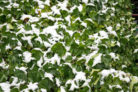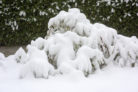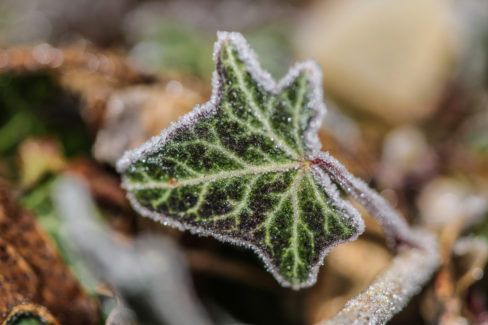
Ever wonder what happens when that biting winter chill hits your lush green ivy? Does it just drop its leaves and freeze solid right then and there? Luckily, it’s not quite that dramatic! But as a plant parent, you definitely need to know when your ivy needs a little extra help to survive the frost.
Common Ivy is a Winter Warrior
The most common variety we see around here is *Hedera helix*, also known as English Ivy. This stuff is tough as nails and considered fully hardy. You can usually let it overwinter in your garden without any special protection. The only exception? If you’ve just planted young ivy this year, give it a little “blanket” of brushwood, pine branches, or a nice thick layer of mulch to help it through its first winter.
Pro Tip:
If you’re planning to fertilize your ivy, make sure to wrap that up by July at the latest. Feeding it any later encourages new, soft growth that won’t have time to harden off before the first freeze, leading to frost damage.
Variegated Varieties are a Bit More Delicate
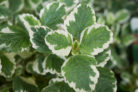
While those two-toned, variegated leaves are gorgeous, they’re also a bit more sensitive to the cold. Some of these colorful varieties can handle temperatures down to 15°F or 20°F, but others can’t stand frost at all. If you’re growing these, I highly recommend keeping them in pots. That way, you can easily winterize them or move them to safety. Here’s how to prep any potted ivy for the cold:
- Bring very sensitive varieties indoors before the first frost.
- Cover outdoor pots with pine branches or brushwood.
- Wrap the pots in burlap to insulate the roots.
- Place the pots on a wooden board or a piece of Styrofoam to keep them off the freezing ground.
It’s Usually Thirst, Not Frost
Here’s a secret: most ivy plants that struggle in the winter aren’t actually freezing—they’re drying out. Since ivy is evergreen, it keeps losing moisture through its leaves all winter long. If it hasn’t rained in a while, the soil gets bone dry. While older plants in the ground have deep roots that can find water, younger plants or those in containers need your help. Give them a good soak on days when the ground isn’t frozen, just be careful not to let them sit in standing water.
Pro Tip:
If you have an ivy hedge, you might notice a few dead vines after a particularly brutal winter. Don’t panic! Just prune those brown bits off in the spring. The ivy will bounce back quickly and fill in those gaps in no time.
Indoor Ivy and the Winter Chill
Since your house stays nice and toasty, you don’t have to worry about “winter hardiness” for indoor ivy. However, keep it away from heaters! The dry air from vents can cause the plant to dry out or attract pests like spider mites. Indoor ivy doesn’t really need a dormant phase, just keep watering it based on how warm your room is.
One last thing: if you’re planning to move an indoor ivy outside permanently, remember that it needs time to acclimate. It won’t be fully winter-hardy right away, so make sure to give it some extra cover until it settles into its new outdoor home.