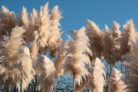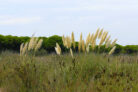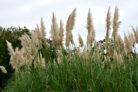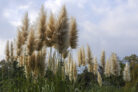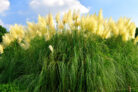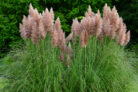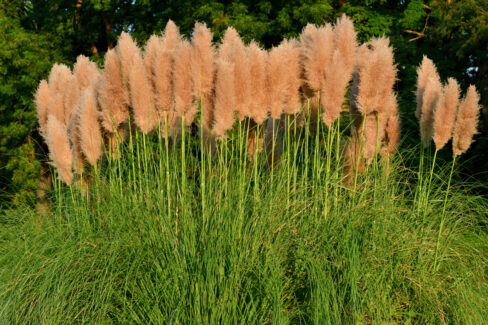
Pampas grass originally hails from South America and belongs to the Poaceae (grass) family. There are quite a few different species and varieties out there, each with its own unique personality. While their blooming schedules and heights can vary, most of them show off their stunning plumes during the late summer and early fall.
A Quick Guide to Different Varieties
Beyond just the bloom time, these varieties differ in color and how tall they’ll get in your garden. Here’s a quick breakdown of what to expect from some popular types:
- Evita: Blooms August to October – bright yellow plumes – reaches 3 to 5 feet.
- Liliput: Blooms September to November – white plumes – reaches 2.5 to 4 feet.
- Pumila: Blooms September and October – silvery-white plumes – reaches 3 to 5 feet.
- Rosa Feder (Pink Feather): Blooms September to November – pink plumes (fading to beige) – reaches 3 to 5 feet.
- Rosea: Blooms September and October – grayish-pink plumes – reaches 2.5 to 6 feet.
- Silverstar: Blooms September and October – white plumes – reaches 5 to 6.5 feet.
- Weiße Feder (White Feather): Blooms September and October – silvery-white plumes – reaches 3 to 8 feet.
What to Do If Your Pampas Grass Isn’t Blooming
Pampas grass is at its absolute best when those fluffy plumes finally emerge. It can be a real bummer for any gardener when the plant stays green but doesn’t flower. If you’re dealing with this, don’t panic! Often, the plant is simply too young. Pampas grass usually needs a few years to establish itself before it has enough energy to focus on blooming alongside its rapid growth.
Other Reasons for a Lack of Blooms
If your plant is mature but still shy, it might be hungry. You might need to step up your fertilizing routine. Well-aged compost is great, but a liquid fertilizer specifically designed for ornamental grasses can also do the trick. If that doesn’t help, take a look at the light—your pampas grass might not be getting enough sun at its current location. These plants are real sun-worshippers!