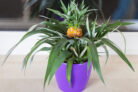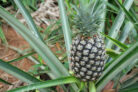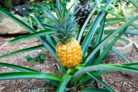
There are a few different ways to get pineapple cuttings to root. Rooting is actually the best way to keep your collection going, because once a mother plant produces fruit, she usually calls it quits and dies off.
Rooting the Leafy Crown
One of the most popular ways to propagate a pineapple is by rooting the leafy top, or crown. A big plus of growing a pineapple this way is that the resulting plants tend to be a bit hardier than those grown from other methods.
How to root the crown:
- Slice off the leafy top.
- Trim away any leftover fruit flesh (this prevents rot!).
- Peel off the bottom 2 or 3 layers of leaves to expose the stem.
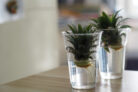
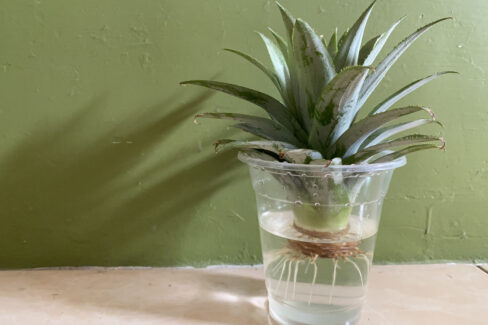
- Pop the crown into a glass of water.
- Change the water every single day to keep it fresh.
Pro tip: Your pineapple will be much happier if you use filtered or lime-free water. Just be patient—it can take several weeks for those first roots to show up.
Rooting Leaf Axil Suckers
Just like the crown, you can also root the “suckers” that grow out from the leaf axils (the crotch where the leaf meets the stem). If you see these little guys starting to sprout, wait until they’re about 8 inches long before you do anything. Then, carefully snip them off with a sharp, clean knife.
Again, strip off the lowest leaves so the stem has plenty of contact with the water. While you can plant these suckers directly into soil, you’ll need to keep the dirt consistently moist and cover them with a humidity dome to stop the leaves from drying out. Since it’s tough to find a clear cover big enough for an 8-inch plant, I usually find it way easier to just root them in water first.
Root Suckers
The pineapple plant is pretty clever when it comes to reproduction. It doesn’t just grow sprouts above ground; it also sends out “pups” or root suckers from under the soil. You can separate these from the mother plant, but you should wait until they’ve developed their own root systems.
The best part about using root suckers is that the mother plant basically “babysits” them, providing nutrients until they have their own roots. Once you see a sprout popping out of the dirt, gently check to see if it has its own roots yet. If it does, go ahead and detach it and move it to its own pot. Just make sure to keep the soil nice and moist for the first few weeks while the youngster gets settled in its new home.