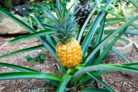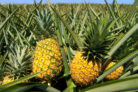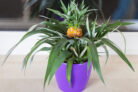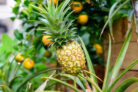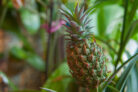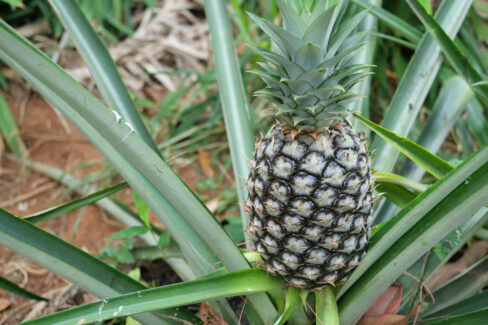
Despite what you might have heard, the pineapple isn’t actually a palm tree—it’s a low-growing, leafy herbaceous plant! While it’s one of the most famous tropical fruits exported around the globe, you don’t need a tropical plantation to enjoy one. You can actually grow them quite successfully right in your living room as a houseplant.
Meet the Bromeliad Family
If you take a quick look at our pineapple profile, you’ll see right away that it has zero relation to palms. It’s actually a member of the Bromeliad family. One quirky thing about bromeliads is that the “mother plant” dies off after it finishes flowering or fruiting. So, if you want to keep your pineapple collection going, you’ll either need to prevent it from blooming or—my personal recommendation—learn how to propagate it regularly.
Ways to Grow New Pineapples:
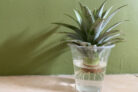
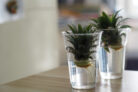
- Rooting the leafy crown (the top of the fruit)
- Using “slips” from the leaf axils
- Planting root suckers
- Starting from seeds
In commercial farming, growers almost exclusively use suckers or slips because the other methods just take too much time and effort.
Those Gorgeous Blooms
The future fruit of a pineapple starts out as a vibrant, intense red bud. But here’s a fun fact: those red parts aren’t actually the flowers! They are “bracts” (specialized leaves) that eventually turn green. Their job is to grab the attention of pollinators. The real flowers are tiny, violet, tube-shaped blossoms that peek out from between those bracts. Depending on where they’re growing, they get pollinated by small insects or even hummingbirds looking for a sweet nectar snack.
If the flowers get pollinated, they’ll produce seeds. You can find these tiny seeds tucked into little notches about half an inch under the skin. Pineapple seeds are tiny—just a few millimeters long—brown, egg-shaped, and slightly pointed. You won’t always find seeds in store-bought fruit, though, especially if they were harvested a bit too early.
Technically, a pineapple is a “multiple fruit” made of berries. All those individual pollinated flowers fuse together to create the iconic shape we know and love. The tough outer rind is actually made of the leftover bits of the sepals and petals, which is why the seeds sit a little deeper inside rather than right on the surface.
The “Pro” Way to Eat a Pineapple
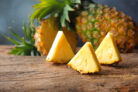
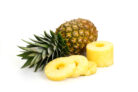
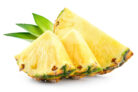
Believe it or not, most of us have been eating pineapples “wrong.” Since a pineapple is a cluster of individual berries (similar to a raspberry), you can actually eat them one by one! You can simply pull the individual segments away from a ripe fruit starting from the top.
The big plus here? You lose way less juice and it’s much easier to pick out any seeds. This can be a total game-changer if you’re prepping fruit for something like freezing your pineapple for later.
Instead of hacking off the whole rind, just slice off the leafy crown. Then, you can cut or pull the segments away from the central core along the top row. If the fruit is perfectly ripe, the “berries” will pop right off. This means you don’t have to struggle with cutting out that tough middle core, and you waste much less of that delicious fruit flesh. Give it a try next time you have a ripe one on the counter!