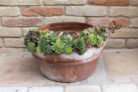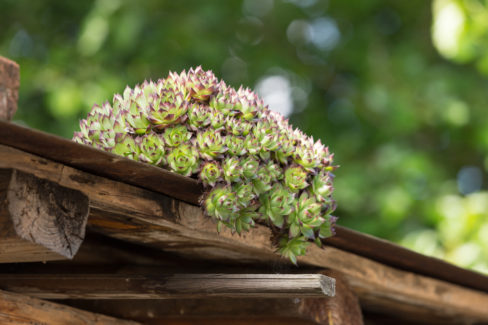
When it comes to planting Hens and Chicks (Sempervivum), your imagination is really the only limit! These hardy little succulents have incredibly shallow root systems and aren’t picky at all when it comes to water or nutrients. Because they’re so low-maintenance, you can actually grow them right on roof tiles.
A Classic Take on Green Roofing
Planting Hens and Chicks on roof tiles isn’t just a modern trend; people have been doing it since the early Middle Ages. In fact, old folk names like “Roof Leek” prove just how long they’ve been hanging out on housetops. Back in the day, people believed these plants had magical powers—specifically, that they could protect a home from lightning strikes and fires. While we might call that superstition today, there’s a grain of truth to it: a roof covered in fleshy, water-storing succulents is definitely less of a fire hazard than a dry one! Regardless of the legends, one thing is for sure: Hens and Chicks absolutely thrive on tiles.
Old Tiles Have So Much Character
If you have a building with a bit of a vintage patina or an old garden shed, adding Hens and Chicks to the roof creates a gorgeous, rustic look. But you don’t have to stop at the roofline! Old clay tiles are fantastic for DIY garden projects. They make unique, individual borders for flower beds, and because Hens and Chicks are so easygoing, you can even use the tiles themselves as tiny, horizontal planters.
How to Get the Job Done Right
If you want to plant Hens and Chicks on roof tiles, there are a few simple rules to follow to make sure they settle in happily:
- Start by creating a drainage layer using expanded clay pebbles or small gravel.
- Fill the rest of the tile with a gritty succulent or cactus soil mix.
- Space out your rosettes, giving them a little room to spread.
- Lightly mist or moisten the soil, but don’t soak it.
Don’t be afraid to go heavy on the drainage layer. Since Hens and Chicks have shallow roots, they don’t need a deep bed of soil or tons of fertilizer. What they *can’t* handle is “wet feet.” Good drainage is the secret to success here. If you’re feeling handy, you can try carefully drilling small holes in the tiles to help rainwater escape, but be gentle—older tiles can crack pretty easily!