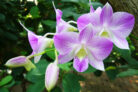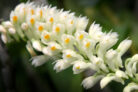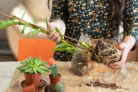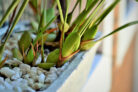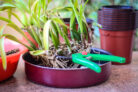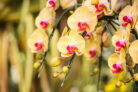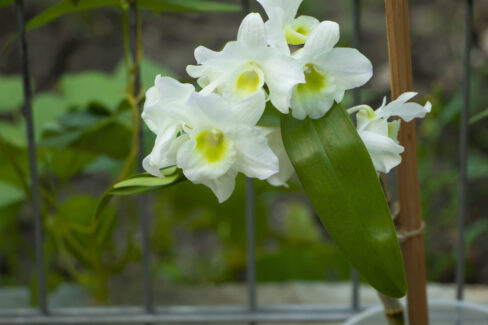
If you’re the proud owner of a *Dendrobium nobile* orchid, you’ve probably noticed some tiny hitchhikers popping up on the stems. These orchids are famous for producing “keikis”—which is Hawaiian for “babies.” These little offshoots are a fantastic way for even beginner gardeners to expand their collection. With a little patience and the right technique, you’ll be a pro at orchid propagation in no time!
Timing is Everything: When to Snip Your Keiki
You’ll often see these babies growing on old canes that have finished blooming. While it’s tempting to move them right away, you need to leave them attached to the mother plant until they’re strong enough to survive on their own. Think of it as “orchid preschool”—they need time to develop.
- Wait to cut until the lower part of the parent bulb starts to turn slightly yellow.
- Make sure the keiki has at least two leaves and several healthy air roots.
- When you’re ready, make your cut about an inch (two centimeters) below the air roots.
Pro tip: Always use a sharp, sterilized tool for a clean cut. I personally love using a disposable scalpel (you can grab these easily online or at a pharmacy). It ensures a precise cut and, most importantly, keeps nasty bacteria or pathogens away from your plants.
Planting and Aftercare for Your New Orchid
To give your baby orchid the best start in life, skip the heavy soil. Instead, pot it in a clear container filled with a mix of expanded clay pebbles (LECA) and coconut fibers. This setup encourages fast root growth.
Once potted, keep the humidity high. A mini-greenhouse is the perfect “nursery” for your orchid baby. If you don’t have one, a clear plastic dome or bag works wonders to create that warm, moist microclimate they love. Aim for a spot with partial shade and a steady temperature around 77°F (25°C). Don’t forget to mist it regularly with soft water!
Once you see roots filling up the pot, your *Dendrobium nobile* is ready for the big leagues. Move it into a permanent pot with pine bark substrate and start treating it just like your full-grown orchids. Happy growing!