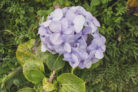
Even a low-maintenance beauty like the Bigleaf Hydrangea (also known as the Mophead or French Hydrangea) needs a little TLC now and then. Along with watering and feeding, pruning is part of the job—but you’ve got to be careful! If you get too scissor-happy, you might end up with a green bush and zero flowers next summer.
Does my Bigleaf Hydrangea really need regular pruning?
The short answer? Not really. In fact, Bigleaf Hydrangeas don’t need a major “haircut” at all, and a heavy pruning can actually do more harm than good. The older your hydrangea gets, the less it appreciates a radical pruning. Of course, you can always clear out dead or diseased stems whenever you see them. Otherwise, your main goal should just be removing spent blooms and dead wood.
When and how should I prune?
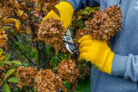
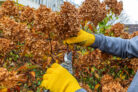
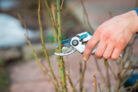
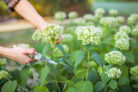
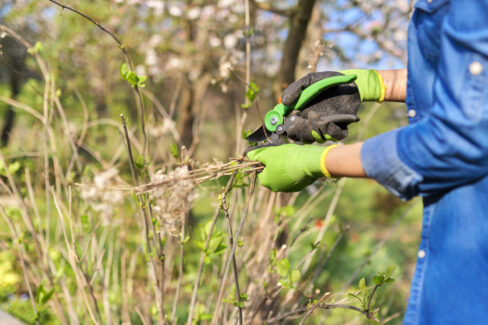
The best time to grab your shears is in the spring. Wait until the worst of the winter frost has passed. If you live in a milder climate, you can get started in late winter. When you’re ready, snip off the old, dried flower heads just above the first pair of healthy, plump buds. If you see any frost-damaged tips, trim those back too. For any completely dead branches, cut them off right at the base of the plant.
What should I watch out for?
When it comes to Bigleaf Hydrangeas, “less is more.” If you’re too aggressive, there’s a big risk your hydrangea won’t bloom at all next summer. This is because these plants set their flower buds for next year right under the old flowers. Be super careful not to accidentally snip off those new buds!
Do I have to cut off the faded flowers?
You don’t have to cut them off immediately—and I actually recommend leaving them alone for a while. These hydrangeas start developing next year’s buds in the fall, and since they are only moderately winter-hardy, those buds are sensitive to the cold.
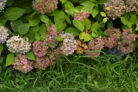
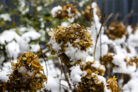
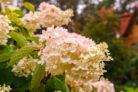
Leaving the old, dried flower heads on the plant through the winter acts as a natural shield for the delicate new buds underneath. Plus, dried hydrangea heads look gorgeous covered in frost and add some lovely winter interest to your garden.
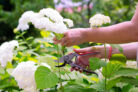
The blooming season usually lasts from June through September or October. Since that’s a long stretch, the first flowers might start looking a bit ragged while the rest are still going strong. If you really want to tidy them up in the summer, just be extremely careful and cut only the stem directly below the flower head.
Quick Guide to Pruning Your Hydrangea:
- Avoid radical pruning; always be gentle.
- Leave old blooms on during winter for natural protection.
- Best time to prune: Spring.
- Snip off spent flowers and frost-damaged tips just above the buds.
- Cut dead wood all the way down to the base.
- Only thin out the plant if absolutely necessary.
- If you’re nervous, check out a quick video tutorial online!
Pro Tip: When in doubt, put the shears down. It’s always better to under-prune a Bigleaf Hydrangea than to over-prune. A heavy hand will almost always cost you those beautiful blooms!