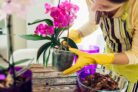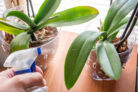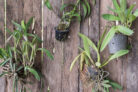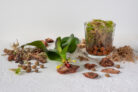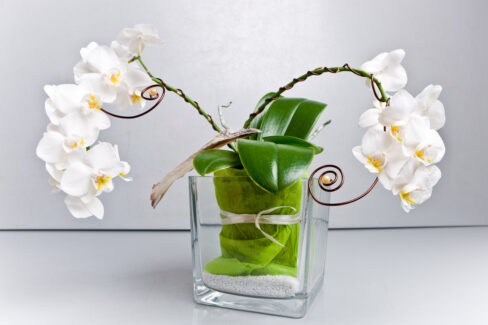
Most of us are used to seeing orchids in standard plastic pots, but since these beauties naturally crave a ton of light, growing them in transparent glass containers is actually a brilliant move. It’s practical, looks stunning, and gives those roots the sunshine they love. Ready to give it a try? Here’s how to move your orchid into a glass home.
The Best Time to Repot
First things first: don’t reach for that glass vase while your orchid is in full bloom. Repotting is a bit of a stressful event for the plant, and if you do it while it’s flowering, it might drop its blossoms in protest. It’s always best to wait until the flowering cycle is completely finished.
Choosing the Right Glass
When it comes to picking out a glass container, the sky’s the limit! Just keep a few practical things in mind: make sure the glass is large enough to comfortably fit the root ball and support the upper part of the plant. You want the orchid to sit deep enough in the glass so it stays stable and doesn’t tip over.
For filling the glass, you have a few options:
- Standard orchid bark/substrate (just like you’d use in a regular pot).
- Decorative elements like glass marbles mixed with sphagnum moss for a more modern look.
How to Repot Your Orchid
Ready to make the switch? Just follow these simple steps:
- Gently lift the orchid out of its old pot. Shake off any old bits of bark stuck to the roots. This is also the perfect time for a quick “root manicure”—use clean snips to cut away any mushy, rotten, or totally dried-out roots.
- Start with a “drainage layer” at the bottom of your glass. Use expanded clay pebbles (LECA) or broken pottery shards.
- Add a layer of orchid substrate, place your plant inside, and fill in the gaps around the roots.
Fun fact: Some epiphytic orchids, especially Vanda hybrids, actually love growing without any soil at all! For these, you can skip the heavy bark and use a mix of sphagnum moss, glass pebbles, or other decorative fillers to keep them happy.
Don’t Forget Drainage!
Since glass vases don’t have drainage holes at the bottom, you have to be extra careful about standing water. This is why that bottom layer of clay pebbles or stones is so important—it keeps the roots from sitting in a puddle, which prevents root rot.
Watering in Glass
Watering an orchid in glass is a little different than the usual “pour and go” method. The best way to do it is to fill the glass with water, let the roots soak it up for a few minutes until they turn a healthy green, and then carefully tip the glass over (holding the plant in place!) to pour every last drop of excess water out.