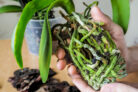
If you want your indoor orchids to stay happy and healthy, you’ve got to give them a little room to breathe every now and then. Repotting isn’t just about giving them a fresh home; it’s about providing nutrient-rich substrate and space to grow. However, you have to be extra careful with those delicate aerial roots!
Repotting Your Orchids
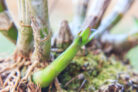
Generally, orchids need to be repotted every two to three years into a fresh pot with new orchid bark or substrate. You’ll know it’s definitely time when those aerial roots start making a break for it—either climbing over the rim or poking out through the drainage holes at the bottom.
Timing is Everything
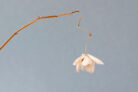
Let’s be real: repotting is stressful for an orchid. To keep your plant from going into shock, avoid repotting while it’s in bloom. The best time to make the move is either right after the flowers have dropped or just as the plant is waking up from its winter rest.
Prepping the Roots
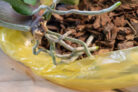
Orchid roots can be pretty stubborn and brittle. To make them more flexible and prevent snapping, give the pot a nice soak in a warm water bath for a little while. This softens the roots up, making them much easier to handle. Pro tip: Add a little orchid fertilizer to the water to give your plant a nutritional boost for its recovery.
Taking the Orchid Out of Its Pot
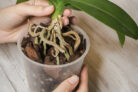
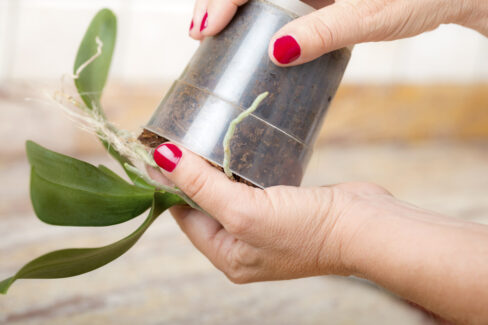
Easy does it! When removing the orchid, be very gentle. If you find roots stuck to the inside of the pot, use a clean, sharp knife to carefully nudge them loose. Once the plant is out, shake off the old substrate and gently untangle the root ball.
Time for a Trim
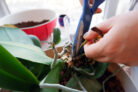
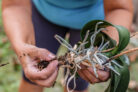
Repotting is the perfect time to do some “root surgery.” Take a sharp pair of snips and cut away any old, dried-out, or mushy, rotted roots. Just make sure you leave the firm, green, healthy roots alone—they’re the plant’s lifeline!
Getting Everything Back in the Pot
When you place the orchid into its new home, try to gently “spiral” all the roots down into the pot. Yes, even those wild aerial roots that were hanging outside the pot before should go inside now. Don’t worry—the orchid will eventually grow new aerial roots that will either dive into the substrate or lounge across the surface.
Treating the Cuts
Healthy roots are pretty resilient, but even small nicks can be an entry point for trouble. To keep things clean, dust any cut ends with a little cinnamon or activated charcoal powder. These natural disinfectants have great antibacterial properties that ward off pests and diseases, helping your orchid bounce back faster than ever.