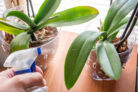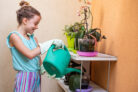
Orchids are easily some of the most popular houseplants out there. These exotic beauties have found a home on just about every windowsill across the country! But if you want to keep those stunning blooms coming back year after year, there are a few “insider tips” you should know before you start planting.
Different Ways to Grow Your Orchids
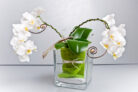
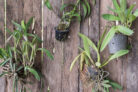
While most of us are used to seeing indoor orchids growing in pots, that’s not your only option. You can actually get creative and grow them in glass vases, or even mount them on wood or hang them up for a more natural look.
Finding the Perfect Spot
In the wild, most orchid species are “epiphytes,” meaning they grow high up on tropical trees in rainforests. To keep them happy at home, we want to mimic that natural environment as much as possible. Here’s what makes a great location for your orchid:
- Plenty of bright, indirect light (avoid that harsh midday sun!).
- Warm temperatures around 77°F (25°C).
- High humidity—ideally at least 60%.
East or west-facing windows are usually the “sweet spot.” If you only have a south-facing window, just make sure to use a sheer curtain to protect your plants from getting sunburned.
Choosing the Right Potting Mix
Most orchids shouldn’t be planted in regular potting soil—it’s too dense and will suffocate the roots. Instead, use a specialized orchid bark or substrate that mimics the airy conditions of a tree branch. The only exception is “terrestrial” orchids, like the Lady Slipper, which actually prefer growing in the ground.
Planting Orchids in Pots
Potting is the most common way to grow orchids, but choosing the right container is key to success.
The Right Pot
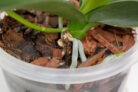
You’ll notice that orchids usually come in clear plastic pots. There’s a reason for that! Orchid roots actually perform photosynthesis and love the light. If you want to use a decorative outer pot, try to find one that is wide or translucent. Also, make sure the outer pot has a little “step” or ledge at the bottom so the orchid isn’t sitting directly in leftover drainage water.
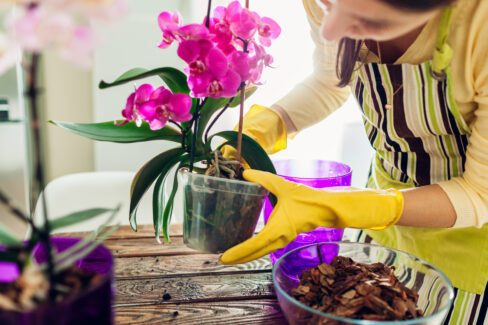
How to Pot Your Orchid
Start by putting a layer of clay pebbles or broken terracotta shards at the bottom of the pot for drainage. Add a little orchid substrate on top. Gently place the orchid and its root ball into the pot—a slight twisting motion helps get the roots in without snapping them. The base of the plant should sit right around the level of the pot’s rim.
Fill in the gaps with more substrate, tapping the pot gently on the table to help the bark settle into the nooks and crannies. Finally, give your orchid a “bath” by dipping the whole pot into lukewarm water so the substrate can soak up plenty of moisture.
Growing Orchids in Lechuza
If you want to make orchid care a total breeze, I highly recommend the Lechuza planting system. It features a special water reservoir that ensures the roots stay hydrated without ever getting “wet feet” (which leads to rot). It basically takes the guesswork out of watering!