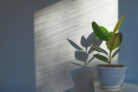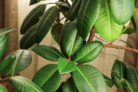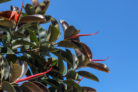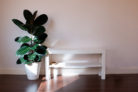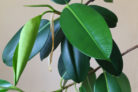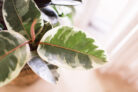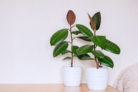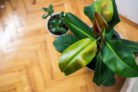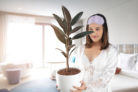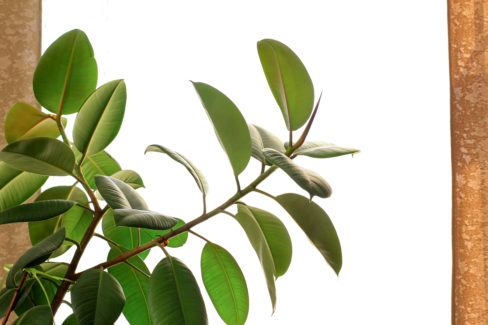
The low-maintenance and super hardy Rubber Tree (botanical name: *Ficus elastica*) absolutely loves a warm, bright spot. Naturally, when we think “bright,” we think “sunny.” But how much direct sun can this popular houseplant actually handle before it’s too much?
Sun vs. Light
Rubber Trees need plenty of light to really thrive and grow. If you tuck yours away in a dark corner, it’ll likely just sit there looking sad, and you won’t see that lush growth we all love. However, “lots of light” doesn’t mean you should leave your plant baking in intense, direct rays all day long.
Too much direct sun can actually be harmful because, believe it or not, plants get sunburned too! You’ll know your Rubber Tree is struggling if you see:
- Large, brown spots on the leaves
- Entire leaves turning a crispy brown color
Unfortunately, there’s no “aloe vera fix” for a plant—once a leaf is scorched, those brown spots are permanent. To prevent further damage, your best bet is to move the plant to a safer spot. That’s why picking the right location from the start is so important.
Rubber Trees Indoors
If you’re keeping your Rubber Tree strictly as an indoor plant, the “sweet spot” is a location that gets:
- Gentle morning sun or
- Soft evening sun
Think of an East- or West-facing window. If a South-facing window is your only option, you’ll need to protect your plant from that intense midday sun (and not just in the summer!). A sheer curtain can work wonders here.
Taking Your Rubber Tree Outside
If you decide to let your Ficus elastica enjoy the summer outdoors, you have to be even more careful about sunburn. On a balcony or patio, the sun hits the leaves directly without a window pane to filter it. To keep your plant happy, you’ll need to “harden it off” by slowly getting it used to the light:
- Start the outdoor season by placing it in a semi-shaded spot.
- Gradually move it toward the sunnier areas over several days.
After about two weeks, your plant should be acclimated. Even then, the same rules apply as they do indoors:
- Morning and evening sun are perfect.
- Avoid the harsh midday sun at all costs—make sure it has some shade during the hottest part of the day.
Winter Quarters
When it’s time to move your Rubber Tree to its winter home, make sure the room stays bright. Even in the winter, the midday sun can be surprisingly strong through glass, so keep an eye on the light levels to ensure your leafy friend stays green and healthy until spring!