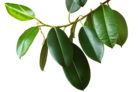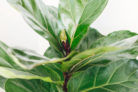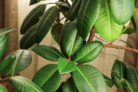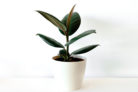
The Rubber Tree, known botanically as *Ficus elastica*, is a total classic in the plant world. In tropical climates, you’ll see these beauties growing as massive shade trees in parks or lining city streets. However, since they can’t handle a frost, most of us keep them as houseplants where they add a great structural vibe to any room.
Appearance and Growth
Rubber trees grow with a sturdy, upright habit. If you give them enough love and a big enough pot, they can easily reach several feet tall indoors, making them a fantastic focal point for your living room.
Leaves
The real stars of the show are those glossy, evergreen leaves. They grow in an alternating pattern along the main trunk and side branches. The stems (petioles) grow up to two inches long, while the leaves themselves can get quite large—up to 6 inches wide and 14 inches long!
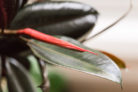
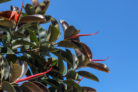
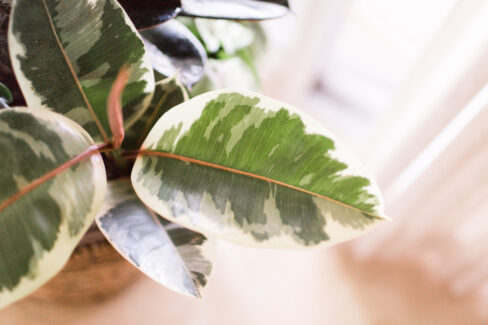
One of the coolest things about them is how new leaves emerge. They’re wrapped in a bright red sheath (stipule) that many people mistake for a flower. Once the leaf unfurls, the sheath falls off. Depending on which variety you pick, the leaf colors can range from deep forest green to wild variegated patterns.
Flowers and Fruit
Don’t hold your breath for flowers; rubber trees rarely, if ever, bloom when grown in pots indoors. Because of that, you won’t see any fruit either. In the wild, they produce small, oval, yellow-green “figs” about half an inch long. They aren’t toxic, but they don’t taste good at all, so they’re definitely not for snacking.
Location and Light
Rubber trees are true sun-seekers and love the warmth. They start getting grumpy once temperatures drop below 50°F (10°C). This means they can spend summer outside on the patio, but they absolutely must come back inside before the first cold snap. The good news? They don’t need a special “winter dorm”—your normal room temperature is just fine.
Whether they are inside or out, *Ficus elastica* needs plenty of bright, indirect light. Just be careful with harsh, direct midday sun, which can actually scorch those pretty leaves.
Care Tips
The *Ficus elastica* is a tough, low-maintenance plant, making it a perfect choice for beginners or anyone who doesn’t have a green thumb just yet.
Watering and Fertilizing
When it comes to maintenance, “less is more” is the golden rule. If you overwater a rubber tree, the standing water can cause root rot, which is the fastest way to kill one. Over-fertilizing can also do more harm than good. Be conservative with your watering can and your fertilizer, and your plant will be much happier.
Pruning
You don’t *have* to prune a rubber tree, but you can certainly trim it back if it’s getting too tall for your ceiling or if you want it to look bushier. Just a heads-up: when you cut the stems, they leak a milky white sap. This sap contains latex, which can cause skin irritation or even severe allergic reactions for people with latex allergies, so you might want to wear gloves!
Popular Rubber Tree Varieties
- Robusta: The classic choice with those iconic, deep green leaves.
- Variegata: Features beautiful creamy-white to pale yellow variegated foliage.
- Tineke: A showstopper with high-contrast white and green variegation.
- Melany: Offers a moodier look with deep green, almost reddish leaves.
- Belize: A stunning variety with a mix of red, white, and green variegation.