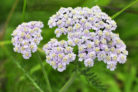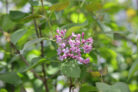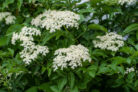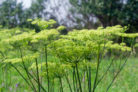
Black elderberry is a total superstar in the world of wild foraging. Whether you’re whipping up a batch of floral syrup from the blossoms or simmering the berries into a rich jam, it’s a versatile plant to have around. However, there’s a catch: elderberry has some toxic look-alikes. Before you head out with your harvest basket, you need to know exactly what you’re looking at. Here’s how to tell the difference between the edible Black Elderberry and its poisonous cousin, the Dwarf Elder.
How to Identify Real Black Elderberry
You’ll spot Black Elderberry (*Sambucus nigra*) pretty frequently out in the wild. But because there are “imposter” shrubs that look strikingly similar, you’ll want to check for these specific features:
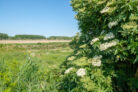
- Where it grows: Look for it as a large shrub or small tree along the edges of forests or lining country roads.
- Size: It usually stands between 10 and 15 feet tall.
- Structure: The branches have a distinct arching or drooping habit.
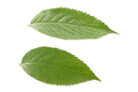
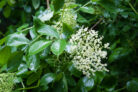
- Leaves: The leaves are elliptical with serrated (saw-tooth) edges. They grow in opposite pairs and are pinnately compound (meaning several leaflets grow along one stem).
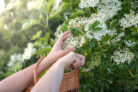
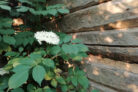
- Flowers: You’ll see clusters of creamy-white flowers arranged in flat-topped umbrellas (cymes).
- Season: It blooms from May to July.
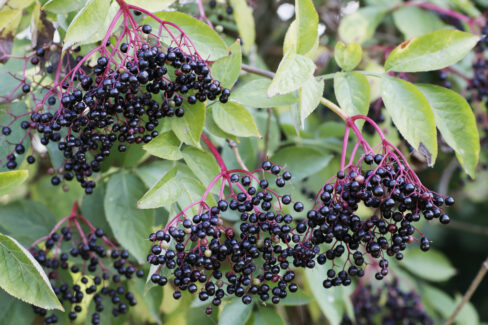
- The Berries: The berries ripen in August and September. They turn a deep purple-black and—this is a key detail—the heavy clusters hang downward.
Don’t Mistake it for Toxic Dwarf Elder
The fruit on the Dwarf Elder (also known as Danewort) looks almost identical to the real deal, but it can make you very sick. Here are the red flags to watch out for:
- The Smell: Dwarf Elder has a very unpleasant, foul odor.
- The Leaves: The leaves are much longer and more slender, reaching up to 6 inches in length.
- The Berries: Unlike the drooping clusters of the real elderberry, Dwarf Elder berries point upward.
- The “Dent”: If you look closely at a Dwarf Elder berry, you’ll often see a tiny indentation or dimple.
- Height: True to its name, this plant stays low to the ground, usually topping out at around 5 feet.
A Quick Safety Note: Never Eat Raw Elderberries
Even if you’ve correctly identified the edible Black Elderberry, you can’t just snack on them straight off the bush! Raw elderberries contain a substance called sambunigrin, which is toxic. You need to cook the berries for at least 30 minutes to neutralize the toxins. Once they’ve been heated through, they are perfectly safe and delicious to enjoy.