Quinces are usually the late bloomers of the harvest season. By the time these bright yellow beauties are ready for picking, most of your other fruit trees have already been harvested and tucked away for winter. But how long can you actually keep them fresh? Let’s dive into the best ways to store your quince harvest.
The Perfect Storage Conditions
Ideally, you’ll want to enjoy or process your quinces right after harvesting. To be honest, they aren’t the best candidates for long-term storage, especially if they have any bruises. Any fruit with even a tiny dent should be used immediately rather than stored. That’s why it’s super important to be extra gentle when picking them!
If your quinces are in pristine condition, you can keep them for up to three months if you follow these tips:
- Keep them solo: Quinces have a very strong, lovely aroma, but they’ll pass that scent onto any other fruit stored nearby.
- Only store the “perfect” ones: Any nicks or bruises will cause the fruit to rot quickly.
- Don’t wait for full ripeness: For storage, it’s actually better to harvest them just before they are fully ripe.
- Keep them away from frost: The sweet spot for temperature is right around 35°F (2°C).
- Find a cool basement: Just a heads-up—modern, well-insulated basements are usually too warm for quince storage.
Basement vs. Refrigerator
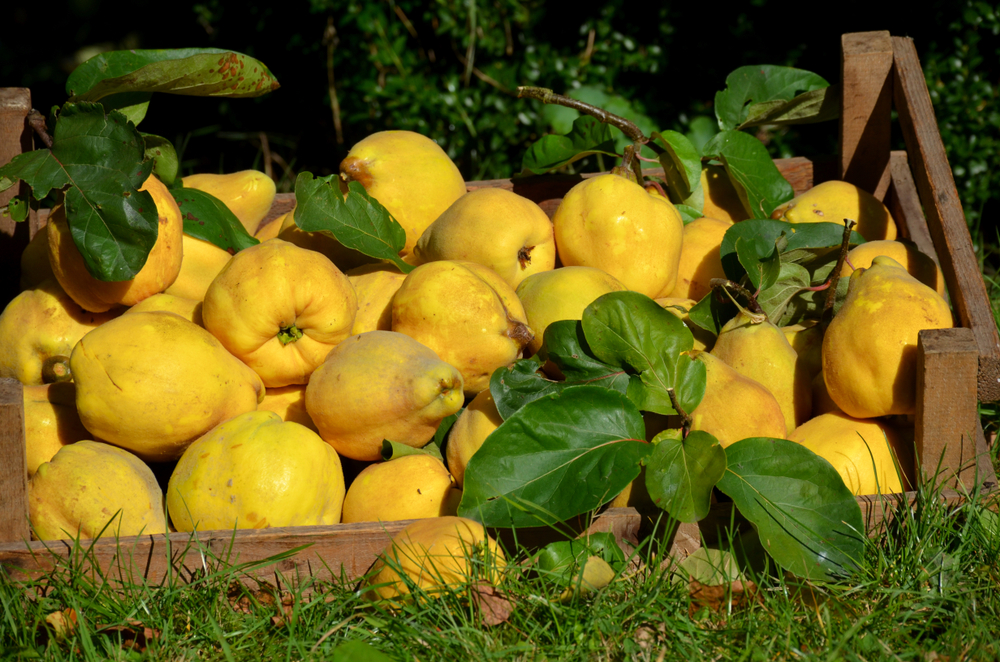
Quinces love a spot that is cool, dark, and well-ventilated. In the right environment, top-quality fruit can last two to three months. Just make sure the area isn’t too damp, or you’ll run into mold issues. I recommend laying them out in a wooden crate, ideally so they aren’t touching each other. This keeps the air flowing and prevents pressure spots.
If you don’t have a cool, dry cellar, the fridge is a great short-term backup. However, they won’t last three months in there—plan on using them within about two weeks. Whether they are in the basement or the fridge, make sure to give them a “wellness check” once a week. If any look like they’re starting to turn, it’s time to get cooking!
If you notice the flesh starting to turn slightly brown, that’s your signal to process them immediately. Bring them in from their winter storage and try drying them, canning them, or making some juice. Quince juice is incredibly healthy and acts as a fantastic vitamin boost during the cold winter months!