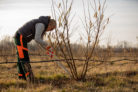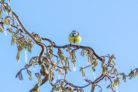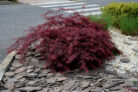
There’s a reason for the old saying “you can’t transplant an old tree.” Trees, in particular, can be pretty dramatic when it comes to moving house. If you’re planning on relocating your Harry Lauder’s Walking Stick (Contorted Hazel), you’ll need to handle the process with a lot of care to keep your plant happy.
Age Matters
Let’s be real: transplanting is a major stressor for a Corkscrew Hazel. Because of this, it’s best to only move younger plants. Once a Corkscrew Hazel hits the five-year mark (or older), its root system is usually so established that moving it becomes a high-risk gamble—you might actually lose the plant. The only exception is if you’ve been growing your hazel in a container. In that case, you should definitely repot older specimens once the roots start hitting the edges of the pot.
Timing is Everything
Aside from age, timing is the biggest factor in a successful move. In the fall, wait until the tree has dropped most of its leaves. You’ll want to head out into the garden on a cloudy, frost-free day to do the heavy lifting. Before you start digging, make sure you’ve picked out the perfect new spot. These beauties love a sunny location that’s protected from harsh winds.
How to Get the Job Done
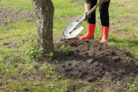
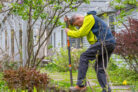
When it’s time to dig, the golden rule is to give the roots plenty of space. Aim for a digging radius that is about two-thirds the height of the tree. Once you’ve cut the perimeter, put the spade aside and use a garden fork to gently loosen the root ball. Try to keep as much soil attached to the roots as possible and be extra careful not to damage the root system. Once you’re at the new site, here’s your checklist:
- Dig a hole that is twice as wide as the root ball.
- Line the bottom of the hole with a mix of mature compost and sand.
- Carefully set your Corkscrew Hazel in the hole and fill the rest of the space with that same compost-sand mix.
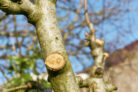
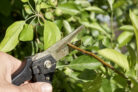
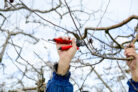
- Prune back the branches so the top growth matches the size of the remaining root system (this helps the plant focus its energy).
- Give it a generous watering, but make sure the soil drains well—you don’t want the roots sitting in a puddle.