Apple trees are the heart and soul of any backyard orchard. Generally speaking, once your tree has been in the ground for about five years, you really want to leave it put. Moving an established tree is always a bit of a gamble because those life-sustaining roots don’t like being disturbed. However, if life happens and you absolutely *must* move it, here’s how to give your tree the best shot at a fresh start.
Prepping Your Tree for the Big Move
The golden rule here? Don’t just dig it up on a whim! Moving a tree—especially older apple trees—requires some serious prep work. You’ll want to start by carefully “trenching” or cutting around the roots in a circle that matches the size of the tree’s canopy. This encourages the tree to grow new, tiny feeder roots closer to the trunk. Ideally, you should do this a full year before the actual move. Remember, the root system is the tree’s lifeline, so treat it with kid gloves throughout the process.
When is the Best Time to Move?
Timing is everything. You want to get your tree moved by April at the latest. The sweet spot is during the dormant season—roughly between September and April—when the ground might freeze at night but thaws during the day. The big advantage of moving a tree during these months is that it isn’t busy growing leaves, blooming, or growing fruit. Trying to transplant a tree in full bloom is a recipe for disaster. Plus, without all that heavy foliage, the tree is way easier to haul to its new home!
Digging Up the Root Ball
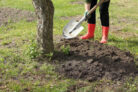
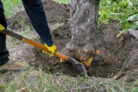
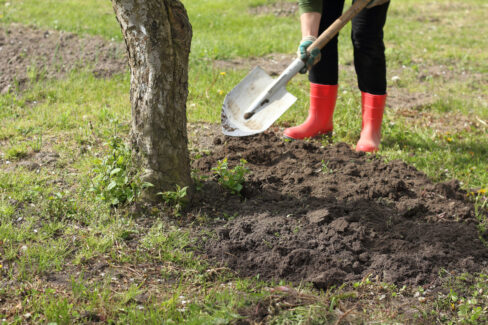
Start by digging a small trench around the root ball. Make sure to keep plenty of soil packed around the roots and use a sharp spade to make clean cuts. Gently loosen the ball from the surrounding earth using a spade and a garden fork. Once it’s free, I highly recommend wrapping the whole root ball in a large burlap sack or a heavy blanket. This keeps the soil intact and protects the roots while you’re moving it across the yard.
Prepping the New Hole
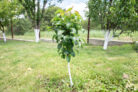
Your new planting hole needs to be a custom fit. Aim for a hole that is about twice as wide as the root ball and just as deep. Once you’ve lowered the tree into its new home, fill in the gaps with some high-quality compost. A pro tip: mix some of the old soil with the new soil to help the tree adjust to its new environment more easily. To help it stay upright while it finds its footing, stake the tree for stability. Finally, give it plenty of water to help those fine feeder roots settle in and start growing!