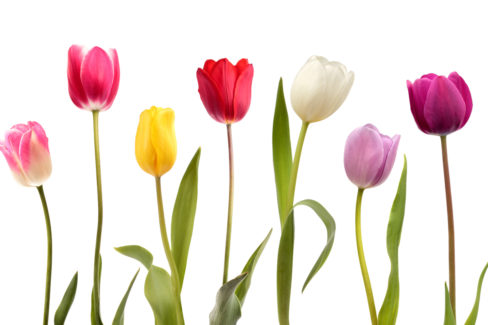
Every spring, I find myself falling in love with tulips all over again. Whether they’re popping up in patio containers, brightening up window boxes, or filling garden beds, there’s just something magical about those hundreds of shapes and colors. If you’ve ever seen photos of the endless, vibrant tulip fields in the Netherlands, you know exactly what I mean—it’s a total color explosion! But as stunning as a whole field is, I think there’s something even more special about looking at a single bloom up close to see just how delicate and intricate nature really is.
Anatomy of a Tulip Bloom
If you take a close look at a tulip, you’ll notice it’s built in layers. First, there’s an outer ring of three petals (technically called sepals). Tucked just inside those are three more petals, and together, these six leaves form that classic, loose cup shape we all love. Right in the center, you’ll find six little stalks holding up dark, slender stamens. In the very middle sits the green pistil (the ovary). The top part, called the stigma, is three-lobed and has a rough, sticky texture—perfect for catching pollen. Once pollination happens, the seeds start developing deep inside.
When Do Tulips Bloom?
Tulips are the ultimate spring ambassadors, but they don’t all show up at once. Depending on the variety, they bloom at different times. My favorite pro tip? Mix and match different varieties in your garden beds so you can enjoy a continuous wave of color for weeks on end!
The Bloom Schedule
Early bloomers, including single and double varieties, usually make their debut in March. Many of these are “wild” or botanical tulips, which are great because you can leave them in the ground and they’ll often come back year after year. Here’s a quick breakdown of when some popular types hit their peak:
- Fosteriana Tulips: These are botanical beauties that can start popping up as early as February.
- Kaufmanniana Tulips: These hardy wild tulips stay low to the ground (about 4–10 inches) and bloom in March or April.
- Early Favorites: Look for varieties like ‘Beauty Queen’ and ‘Purple Prince,’ or the striking ‘Monsella’ and ‘Calimero.’
- Mid-Season Stars: Triumph tulips, Darwin hybrids, and double ‘Murillo’ tulips usually take the stage from late April to early May.
- Reliable Picks: ‘Calgary’ and ‘Pako’ are great Triumphs, while ‘Apeldoorn’ and ‘Garant’ are fantastic tall Darwin hybrids.
- Late Bloomers: From late May often into early summer, you’ll see the showstoppers like Parrot tulips, Viridiflora, and Peony-flowered tulips.
- Late-Season Varieties: Keep an eye out for ‘Companion,’ ‘Menton,’ ‘Florette,’ and ‘Ballade.’
Seed Formation
Once the blooming season wraps up, the petals will start to wither and fall away. If the flower was successfully pollinated, the seeds will begin to develop inside the ovary. This process takes about 8 to 10 weeks. Once the seed pods are completely dry and brittle, you can harvest them and gently rub them to release the seeds for next time!