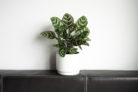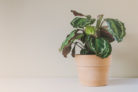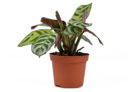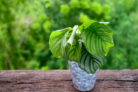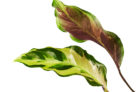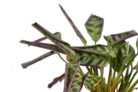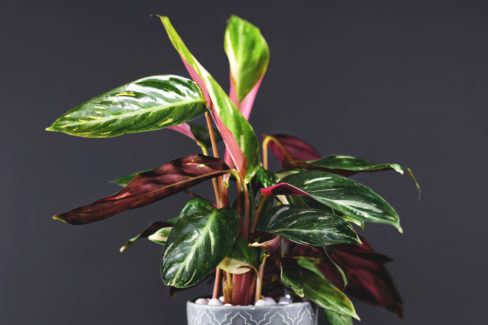
If you’ve noticed your Calathea’s leaves starting to curl up, don’t panic—but do take it as a little “S.O.S.” from your plant. These beauties (often called Prayer Plants or Peacock Plants) are famous for being a bit high-maintenance. When they aren’t happy with their environment or your watering routine, they let you know pretty quickly by curling their foliage.
Why Are My Calathea Leaves Curling?
The good news is that Calatheas are very communicative. If something is off, they’ll show it almost immediately, usually by drooping or curling their leaves into tight tubes. Usually, this is a sign that the plant is trying to protect itself from losing moisture or is stressed by its current spot in your home.
Calathea Care Cheat Sheet
To keep those leaves flat and fabulous, here’s what your plant is looking for:
- Avoid direct sun: They hate harsh, direct light.
- No midday sun: The hot afternoon rays will scorch them.
- Watch for drafts: Keep them away from AC vents or drafty windows.
- Consistency is key: Never let the soil dry out completely.
- Drainage matters: Don’t let them sit in soggy soil (root rot is real!).
- Humidity, humidity, humidity: They crave about 80% humidity.
- Easy on the fertilizer: Don’t overdo it.
- Think “Jungle Floor”: They prefer low light to partial shade.
Location, Location, Location
If your Calathea is curling, check its spot first. It might be getting too much light; these plants are native to the forest floor, so they prefer dappled shade. Also, check for “invisible” stressors like drafts. A chilly breeze from a window or a blast of dry air from a heater can cause the leaves to curl up in self-defense.
Common Watering Mistakes
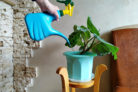
Watering is usually where most plant parents run into trouble. Calatheas like to stay “pleasantly moist”—think of a wrung-out sponge. If the soil gets bone-dry, the leaves will curl. On the flip side, they hate “wet feet,” so make sure they aren’t swimming in a saucer of water.
Another pro tip: Calatheas are very sensitive to the minerals in tap water. If you have hard water, the lime and chlorine can cause leaf issues. Try using rainwater or distilled water instead. And don’t forget the air! If your home is dry (especially in winter), a humidifier or a pebble tray is a must to keep that humidity high.
Pruning Old Growth
The great thing about Calatheas is that they handle pruning very well. If you see leaves that are totally dried out or yellowed, go ahead and snip them off with clean, sharp shears. Make your cut as close to the base of the plant as possible to keep it looking tidy and to encourage new, healthy growth.