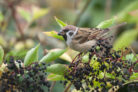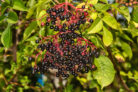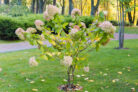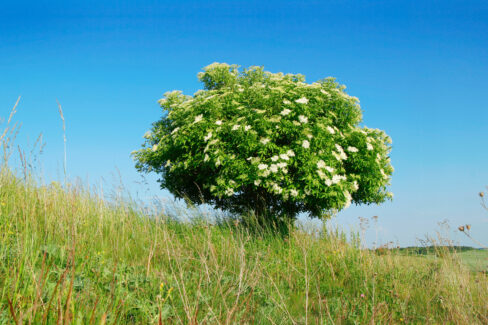
Elderberry bushes are incredibly resilient and handle pruning like a champ. One of my favorite ways to grow them is as a “standard”—which is just a fancy gardening term for training them into a small tree shape. Not only does this give the plant a beautiful weeping look, but it also makes harvesting those fragrant flowers and juicy berries so much easier on your back! Here’s my guide on how to transform your elderberry into a stunning focal point.
How to Train a Standard Elderberry: Step-by-Step
You don’t necessarily need a brand-new sapling to start this project. While pruning younger plants is a bit simpler, elderberries are so tough that you can convert an established bush at almost any time.
If your elderberry is starting to take over the garden, or if you’ve even considered digging it out because it’s too messy, try this “tree-style” training first:
- Pick out one strong, straight branch to be your main trunk.
- Ideally, this branch should be centrally located.
- Cut all other competing shoots right down to the ground.
- Prune away any side branches on your chosen “trunk” up to the height where you want the canopy to start.
- Stake the main branch with a sturdy pole to keep it growing straight.
- Keep an eye on the base—regularly remove any new suckers or shoots that pop up from the ground.
- Consistently trim off any new side growth appearing on the trunk itself.
Pruning for a Gorgeous Canopy
Once you’ve established the trunk, the fun part begins: shaping the crown! The best time to do this is right after the harvest. Here’s how to get that perfect look:
- Pick a dry, slightly cloudy day for pruning to prevent stress on the plant.
- Make sure your shears are sharp and disinfected to keep the cuts clean.
- Remove any spindly, weak twigs or dead wood.
- Shorten the branches you just harvested from to your preferred length.
- Be gentle with the long fruiting shoots—only tip them back slightly.
- Always make your cuts about a quarter-inch (5mm) above a bud.