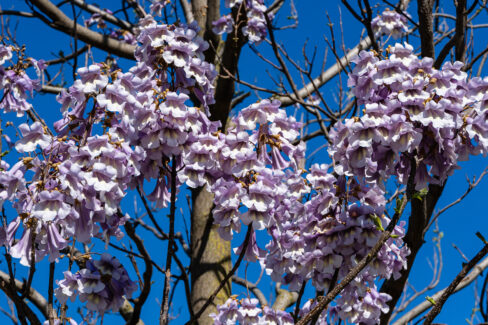
Known to many as the Empress Tree or Paulownia, the Princess Tree is a total showstopper with its massive leaves and stunning clusters of purple blooms. It’s no wonder gardeners all over the globe are obsessed! But if you want this beauty to truly thrive in your backyard, you’ve got to look beneath the surface. A happy tree starts with healthy roots, and today I’m breaking down everything you need to know to get it right.
Root System Needs
Above ground, a Princess Tree can soar up to 50 feet high. But growth doesn’t stop there—imagine an equally impressive world underground. These trees don’t just send roots straight down; they develop a wide, powerful root ball that anchors the tree and drinks up nutrients. Understanding what’s happening in the dirt is key to a healthy tree.
Root Characteristics at a Glance:
- Depth/Length: Can reach up to 13 feet.
- Structure: Deep-reaching and very strong.
- Cold Tolerance: Roots are sensitive to extreme freezes (not fully winter-hardy in all zones).
- Heads Up: Their massive size can actually damage nearby walls or foundations.
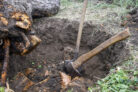
The biggest “no-no” for Paulownia roots is “wet feet.” These trees absolutely hate sitting in soggy soil. If your garden has poor drainage, the roots can quickly develop rot, which can be a death sentence for the tree. If you do run into root rot, you’ll need to prune away the mushy, affected parts. To prevent this, I always recommend adding a drainage layer (like gravel or sand) when planting to keep that water moving.
Should You Prune Paulownia Roots?
While you can be pretty bold when pruning the branches of your tree, you want to be much more careful with the roots. Generally, there are only three reasons you’d ever need to trim them: First, if you’re cutting away rot. Second, if you are growing a Paulownia as a bonsai. And third, if you’re keeping your tree in a large container. In that case, a light root trim helps manage the tree’s size so it doesn’t outgrow its pot too quickly.
To give those roots a little extra love, you can definitely use a bit of fertilizer. Just make sure you only feed them during the warm growing season. Stick to organic options or a good liquid fertilizer to keep the root system strong and vibrant!