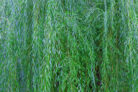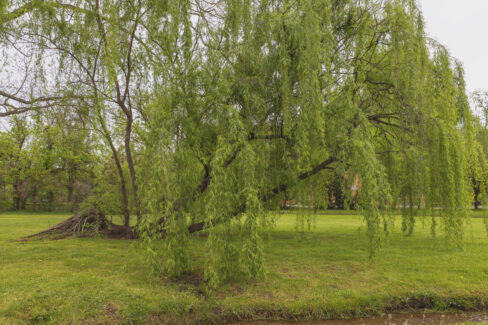
With their lush, full foliage, willow trees are absolute showstoppers in any landscape. There’s a good reason you see them gracing so many public parks! But to keep all those beautiful leaves and branches healthy, the tree has to develop an extensive root system underground. If you’re thinking about adding one to your yard, here’s everything you need to know about what’s going on beneath the surface.
Willows are shallow-rooted trees
In the gardening world, we generally talk about two types of roots: taproots and shallow roots. Taproots grow deep into the earth like a giant spike, giving trees a super-firm anchor. Shallow-rooted trees, on the other hand, spread their roots out wide. They form a broad “plate” of roots just under the soil surface, which helps the plant soak up tons of moisture and nutrients from the topsoil. The willow is a classic example of a shallow-rooted tree.
Don’t let the term “shallow” fool you, though—it doesn’t mean the roots are weak. Quite the opposite! Willows develop very thick, fleshy, and powerful roots. You can actually see how aggressive this growth is for yourself: if you put a few willow cuttings in a jar of water, you’ll see new roots sprouting in just a few days. That incredible drive to grow is exactly what happens underground, too.
What those roots are capable of
To stay healthy, a willow needs constant access to moisture. That’s why they thrive so well near water—there’s a reason you always see them hanging out by ponds and lakes in the park! However, you need to keep in mind that these roots are incredibly strong and persistent. Because of their power, there are a few spots where you definitely shouldn’t plant a willow.
Willow roots can cause real damage if they are:
- Planted too close to your house (watch out for foundations!)
- Right next to a fence or a neighbor’s property line
- Near a road, driveway, or paved walkway (they can lift pavement right up!)
As far as soil goes, these roots are happiest in neutral to slightly acidic ground, especially if there’s a bit of sand or loam mixed in. One final pro-tip: if you ever decide to get rid of a willow, you can’t just cut it down. You have to completely remove the root system, or this stubborn tree will likely try to make a comeback!