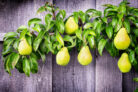
Pear trees are quite the versatile addition to any backyard, ranging anywhere from 10 to over 60 feet tall depending on the variety. With a little TLC, these beauties can live for 70 years or more! To keep your tree thriving and your harvest baskets full, getting the nutrient balance right is key.
Feeding Different Types of Pear Trees
Standard and Semi-Dwarf Trees
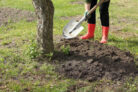
These larger pear trees are usually grafted onto seedling rootstocks (check out our grafting guide here) , which gives them a powerhouse root system. Because their roots dive deep into the soil rather than just spreading out near the surface, they’re excellent at foraging for their own food. If your soil is decent, older trees often don’t need much extra help. Usually, a good top-dressing of ripe compost in the spring is all they need to stay happy.
Spindle and Bush Forms
If you don’t have room for a giant, you probably have a spindle or bush form grafted onto quince rootstock to keep it compact. However, these root systems stay relatively shallow, meaning they can’t reach nutrients deep underground. Starting in their second year, these trees appreciate a little nitrogen to boost growth, while phosphorus and potassium will help them pop with blossoms.
Pro tip: Create a “tree circle” by keeping the area directly under the canopy free of weeds. This reduces competition for food. You can mulch this area with a mix of compost and rock dust, or even plant “green manure” like mustard or marigolds to keep the soil healthy and the pests away.
Potted Pear Trees
For those with limited space or a sunny patio, you can absolutely grow a pear tree in a large container . Since the roots are confined, you’re the sole provider of their “meals.” Keep in mind that during hot summer months, a potted pear can drink 1.5 to 2.5 gallons of water a day!
Be a bit careful with nitrogen here—it fuels branch growth, and too much will have your tree outgrowing its pot (and your patio) in no time. Focus more on phosphorus starting in the second year to encourage plenty of fruit for a big harvest.
Which Fertilizer Does What?
Nitrogen (N)
Nitrogen is the “go-button” for green growth and new shoots. It’s best applied in early spring. Just make sure to stop by August! If you fertilize too late in the season, the tree will put out tender new growth that won’t have time to harden off before winter, making it an easy target for frost damage. Always follow the dosage on the label—more isn’t always better!
Potassium (K) and Phosphorus (P)
If your pear tree isn’t blooming like it should, you might need more potassium and phosphorus. The best time to apply these is June or July, which is actually when the tree is already “deciding” how many blossoms to create for the following year. Check with your local garden center to find the right blend for your specific soil type.
Quick Tip: Don’t overdo it! Over-fertilized trees can actually become “soft” and more susceptible to diseases and pests. Balance is everything in the garden.