Ever wonder what’s going on beneath the surface of your pear tree? Pear tree roots can be deep divers or surface dwellers, and it all comes down to the “rootstock” they were grafted onto. Let’s dig into the fascinating world of pear tree roots and what makes them tick.
Roots: A Quick Biology Refresher
Roots are the life support system for every plant. The thick, woody roots act like anchors, keeping the tree steady in the ground, while the tiny root hairs and fine rootlets do the heavy lifting of absorbing water and nutrients. All these roots work together to pump “food” up into the branches and leaves.
Root growth only happens at the very tip, which is protected by a slimy little root cap. This cap acts like a lubricant, helping the root glide through the soil. Right behind that tip is where the root hairs live. To get enough nutrients , many trees team up with fungi in a cool partnership called symbiosis. The fungi help the roots find water and minerals, and in exchange, the tree shares some of the glucose it makes through photosynthesis. It’s a win-win!
The Three Main Root Types
In the tree world, we generally talk about three different root structures. Here’s the breakdown:
- Shallow Rooters (Lateral)
- Heart Rooters
- Deep Rooters (Taproots)
Shallow Rooters
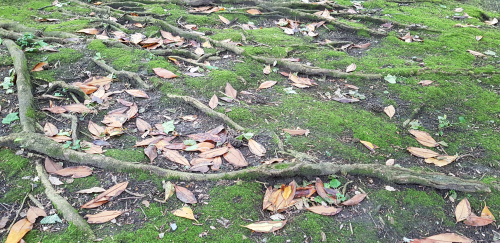
With these trees, the main vertical root stays small while the side roots spread out wide. Because the root system stays near the surface, these trees aren’t always the most stable during a big storm.
Heart Rooters
These trees grow a strong main taproot along with horizontal side roots, creating a shape that looks a bit like a heart—hence the name!
Deep Rooters
A deep-rooting tree features a massive taproot that can, in extreme cases, reach up to 100 feet deep, though 30 feet is more common. These roots are great at finding water deep underground and make the tree incredibly sturdy.
The Lowdown on Pear Tree Roots
Pear trees can be either deep rooters or shallow rooters depending on how they were grown. The secret lies in the grafting process. If a pear tree is grafted onto “seedling rootstock,” it will grow deep roots and become a massive tree—think semi-standard or full-standard sizes. These trees are rock-solid in the ground, but transplanting a mature one is nearly impossible because those roots go so deep.
On the other hand, many garden pears are grafted onto quince rootstock. Quince roots stay shallow but spread out wide. While these trees are more prone to tipping over in high winds, they stay much smaller, making them perfect for backyard gardens.
Pro Tip: Since shallow-rooted trees can’t reach deep water reserves, make sure to give them extra water and fertilizer during dry spells. It also helps to keep the area under the tree clear of weeds. You can even plant “green manure” like marigolds, mustard, or red clover nearby to keep the soil healthy. Your trees will definitely thank you for it!