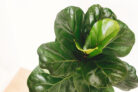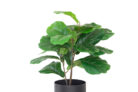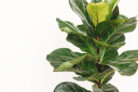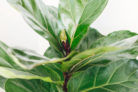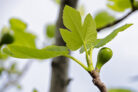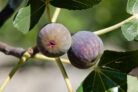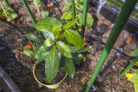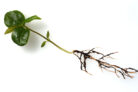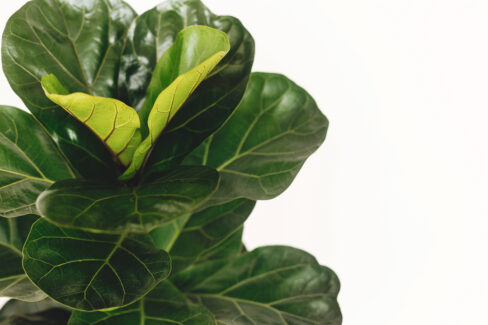
The Fiddle Leaf Fig is a total superstar in the world of houseplants. However, since they don’t flower or produce seeds when grown indoors, you can’t exactly wait for nature to do the work for you. But don’t worry! Your plant is usually more than happy to give up a cutting. Even if your thumb is only a pale shade of green, you can totally pull off growing a brand-new baby Fiddle Leaf.
Stem Cuttings or Air Layering?
The Fiddle Leaf Fig (or *Ficus lyrata* if you want to get fancy) is famous for its dramatic shape and massive leaves, but it’s not always the most prolific brancher. Before you grab the shears, take a good look at your plant to see if it has a suitable “tip cutting.” You’re looking for young, soft growth, which is usually found on newer plants. If your fig is already well-branched, you can take a cutting without ruining its “aesthetic.”
For older, woodier Fiddle Leaf Figs, air layering is the way to go. This works best if the plant has tall, sturdy branches. Even though our homes stay warm year-round, the absolute best time for propagation is spring. This gives the new plant months of bright, natural light to fuel a growth spurt. If you’re starting in the off-season, you can always help it along with some grow lights.
How to Root Stem Cuttings
- Cut a tip cutting that is about 6 inches long.
- Briefly dip the cut end into warm water to stop the sap from flowing.
- Let the end air-dry for just a few minutes.
- Fill a small pot with seed-starting mix and tuck the cutting in.
- Create a “mini greenhouse” by covering it with plastic wrap or a clear bag (just remember to air it out daily).
- Place the pot in a bright, warm spot.
- Keep the soil consistently moist, but not soggy.
Propagating via Air Layering
If an older Fiddle Leaf Fig starts dropping its lower leaves, it can start looking a bit “naked” at the bottom. Air layering is a great trick to grow a new clone that you can eventually plant at the base of the original to create a fuller, bushier look.
- Make an upward diagonal cut about halfway through a woody stem.
- Carefully bend the stem at the cut.
- Tuck a small pebble or toothpick into the slit to keep it open.
- Wrap the area in damp sphagnum moss, then wrap that in plastic wrap to hold the moisture in.
- Roots should start to form in about four to six weeks.
- Once you see roots, cut the new plant off below the root ball and pot it up.
Pro Tip:
If you want your young plants to look full and lush, encourage them to branch out early on. All you have to do is regularly pinch off or prune the very tips of the stems.
No Plant? No Problem.
If you don’t have a Fiddle Leaf Fig yet, you obviously can’t take a cutting. If that’s the case, you can actually find seeds for these beauties online. Growing them from scratch works surprisingly well as long as you can provide plenty of light, warmth, and humidity.