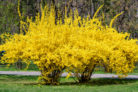
Forsythias are some of the very first shrubs to burst into bloom in the spring. For most of us, those bright yellow flowers are the ultimate sign that winter is finally over! It’s no wonder they’re such a backyard favorite. If you want more of that golden glow in your garden, you’ll be happy to know they are incredibly easy to propagate using layers.
Is it easy to grow Forsythia from layers?
Forsythias are tough-as-nails and very low-maintenance. Luckily, propagating these decorative shrubs is just as simple as caring for them. You can grow new ones using cuttings or through a method called “layering” (sometimes called “drop-layering”).
What’s the difference between a layer and a cutting?
People often use these terms interchangeably, but there’s actually a slight difference. Technically speaking, cuttings are pieces of a branch that you snip off and stick into the soil to root. Layers, on the other hand, stay attached to the mother plant while they develop their own root system.
Step-by-Step Layering:
- Propagating through layering is pretty straightforward.
- Dig a shallow trench in the soil right next to your forsythia.
- Pick out a healthy branch from last year’s growth.
- Gently nick or “wound” the underside of the branch where it will touch the soil.
- Lay the branch into the trench and cover that section with soil.
- Secure it in place (a heavy stone, a tent peg, or a landscape staple works great).
- Bend the very tip of the branch upward and stake it so it knows which way to grow.
- After about a year, the new plant should have enough roots to be snipped away and transplanted elsewhere.
How should you care for the layers?
Layers root best in slightly moist soil, but since they are still attached to the main plant, you usually don’t even need to water them separately. In fact, these shrubs often do the work for you! Sometimes low-hanging branches touch the ground on their own and start growing roots without any help at all.
Are cuttings just as successful as layering?
Propagating forsythia with cuttings is generally just as successful as layering—you can even use this method to start a bonsai! However, it does require a bit more “TLC” from you. You’ll need to prune them correctly and keep a close eye on their moisture levels while they root. Just like layering, the new plants will be genetic clones of the mother plant.
Quick Tip: If you’re looking for the absolute easiest way to get new forsythias for free, layering is the way to go.