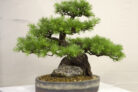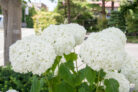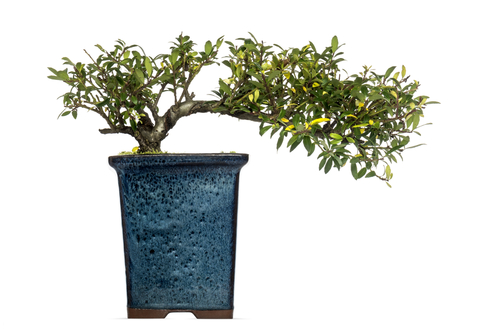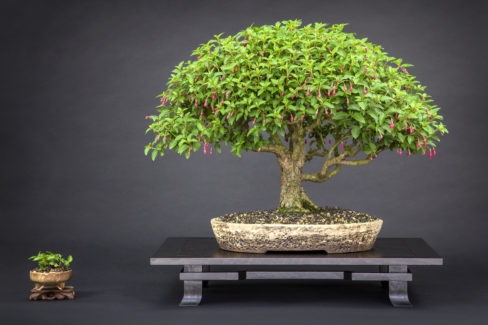
Fuchsias don’t always have to stick to the same old shapes. If you’re looking for something truly eye-catching and full of character, growing a fuchsia as a bonsai is a total game-changer!
The Best Varieties for Bonsai Training
Not every fuchsia is a natural fit for the bonsai look. You’ll want to pick varieties that naturally lend themselves to a miniature aesthetic. Some of my top picks include:
- Fuchsia microphylla
- Scarlet Fuchsia (Fuchsia magellanica)
- Hardy Fuchsia (Fuchsia magellanica variants)
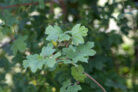
The secret sauce for these varieties? They all have relatively tiny leaves. When you’re aiming for that perfect bonsai silhouette, small foliage is exactly what you need to keep everything in scale.
What Makes a Fuchsia Good for Bonsai?
The varieties I just mentioned—along with a few others—are great candidates because they naturally grow fine, delicate branches. Since fuchsias can thrive indoors if you give them enough light, they also make fantastic indoor bonsai with the right TLC.
Getting the Soil and Pot Just Right
If you want your fuchsia bonsai to thrive, you have to nail the substrate. Fuchsia roots are a bit like Goldilocks: they want to stay moist, but never soggy. You need a soil mix that holds onto moisture while still letting excess water drain away freely. Avoiding “wet feet” is the only way your fuchsia will feel happy enough to show off those gorgeous blooms.
The pot you choose is just as important as the soil. While most bonsai look stunning in those classic shallow trays, they can be tricky for fuchsias. Shallow pots dry out super fast, especially in the summer heat or a warm living room. I usually recommend using a slightly deeper bonsai pot. It holds moisture longer, which keeps the root ball much happier and more stable.
Shaping Your Bonsai
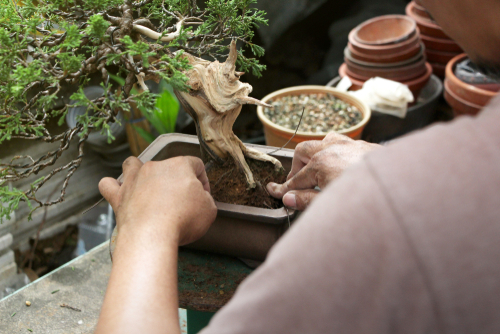
Now, for the creative part! Training a fuchsia into a specific shape takes a bit of patience. Their branches can be surprisingly brittle, so you can’t just bend them into place like you might with other trees. However, young green shoots are much more flexible. If you start shaping your plant while it’s still a “teenager,” you’ll have much better luck. For older plants, your best bet is to skip the wire and simply use your pruning shears to “clip and grow” the plant into the shape you want.