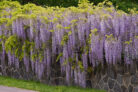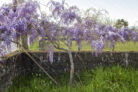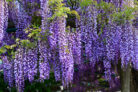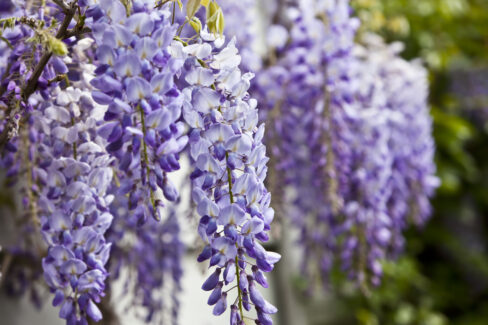
Grafting Wisteria is a total game-changer, much like it is for many of our favorite garden staples. If you’ve ever wondered why some vines look like a floral waterfall while others just sit there looking green, grafting is usually the secret sauce. Here’s the lowdown on why it matters and how to care for your grafted beauty.
Why is Wisteria Grafted?
In the gardening world, grafting is basically taking a cutting from one plant and “hitching a ride” on the root system of another. The top part (the scion) grows as the star of the show, while the bottom part (the rootstock) provides the muscle. This setup helps the plant reach a decent size much faster and—most importantly—drastically cuts down the wait time for those first blooms.
The Big Perks of Grafting:
- More spectacular flowers
- Much faster blooming (no waiting a decade!)
- Creates a sturdy, reliable trunk
This is a huge deal for Wisteria because plants grown from seed can be notoriously stubborn, sometimes taking years (or even decades) to flower. Grafted versions are generally hardier and produce way more lush, full clusters than their seed-grown cousins. If you want that “wow factor” in your backyard sooner rather than later, definitely go for a grafted plant.
Pro Tips for Caring for Your Grafted Wisteria
Technically, you could try grafting Wisteria yourself, but I’ll be honest: it’s pretty tricky and doesn’t always take. If you’re looking to propagate your own, layering (rooting a branch while it’s still attached to the parent) is usually much easier for us home gardeners. But if you’re feeling adventurous and want to graft, you’ll need a solid rootstock to act as the foundation for your Wisteria cutting.
Once you have a grafted Wisteria in the ground, there’s one golden rule: keep an eye on the graft union (that bump on the lower trunk). You need to prune away any “suckers” or side shoots that sprout *below* that point. If you let them grow, the rootstock might take over! Everything *above* the graft can be pruned and shaped as usual. Just be extra careful never to cut or damage the graft union itself.
As for feeding, treat your grafted vine to the right fertilizer. Stick to low-nitrogen options, like well-aged compost or a specific bloom-boosting formula from your local nursery. Too much nitrogen will give you tons of leaves but very few flowers—and we’re all here for those gorgeous purple blooms!