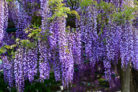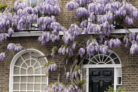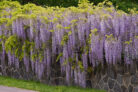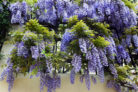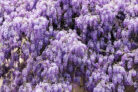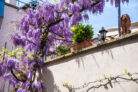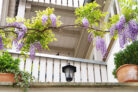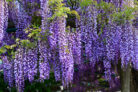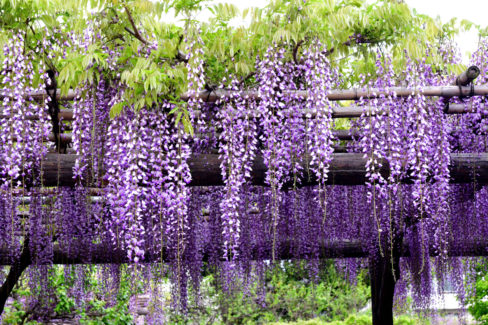
With its cascading blue blooms, Wisteria adds a literal touch of magic to any backyard paradise. But if you want this climber to thrive and look its best, a little TLC goes a long way. Follow these tips, and you’ll have a stunning, flower-covered pergola in no time!
Planting Wisteria on Your Pergola
To make sure your Wisteria feels right at home, you’ve got to pick the perfect spot and keep a few things in mind during planting. First off, make sure your pergola is in a sunny location. While the plant might grow in the shade if the soil is rich enough, you’ll barely see any of those iconic flowers without plenty of sunlight.
Another thing to watch out for is Wisteria’s aggressive root system. Typically, the roots consist of a few deep taproots along with a root ball that spreads out quite wide. To prevent the plant from damaging walls or lifting up your patio pavers, give it some breathing room away from structures. You might even want to install a root barrier to keep it from slowly taking over the rest of your garden.
Care and Feeding for a Happy Wisteria
If you want a gorgeous pergola, regular pruning is your best friend. You should definitely give it a good trim in the spring once the threat of frost has passed. This helps you shape the vine so that the floral “carpet” drapes beautifully over the structure. Plus, pruning actually encourages the plant’s natural growth. Don’t be shy with the shears—Wisteria is a vigorous grower and can handle a heavy cut just fine!
To produce all those spectacular blossoms, Wisteria needs plenty of fuel. Start fertilizing in the spring as soon as the first new shoots appear. You can use mature compost or a low-nitrogen, slow-release fertilizer. Whatever you do, avoid high-nitrogen fertilizers! Too much nitrogen will actually discourage flower production, which is the last thing you want when you’re dreaming of those blue blooms.